


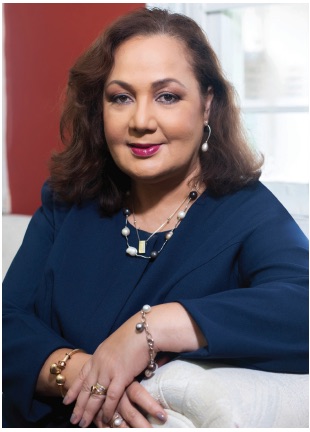
EDITOR’S NOTE: On July 23, 2026, UWI St Augustine Campus Principal Professor Rose-Marie Belle Antoine delivered remarks at the inaugural Caribbean AI Forum (CAIF 2026) held at the University Inn and Conference Centre. UWI TODAY is pleased to share an excerpt from her remarks.
I am delighted to welcome policymakers, innovators, researchers, entrepreneurs, development partners, and students from across the Caribbean and beyond, who have gathered here with a shared commitment to shaping our region’s digital future.
Today is particularly significant because this forum is not simply a conference about technology. In recognition of the potential impact of AI, the Caribbean AI Task Force was established by the CTU following the adoption of a resolution by Caribbean ICT Ministers to develop harmonised policy recommendations and advance a coordinated regional approach to AI governance. Bringing together experts from government, academia, civil society, the private sector and international organisations, this task force represents one of the most ambitious regional collaborations in the digital arena yet.
I am certain you must have heard this phrase often, yet it bears repeating in this instance: the Caribbean stands at an important crossroads. We have all witnessed the way AI is transforming societies. How will we collectively shape it to serve our region?
The Interim Report of the Caribbean AI Task Force argues that our region must be a standards-maker rather than merely a standards-taker, so that emerging AI systems reflect our regional values and priorities. This forum demonstrates our commitment to ensuring that the Caribbean is not merely a consumer of emerging technologies, but an active contributor to their development, governance, and responsible application.
Given the immense responsibility for getting AI “right” in our region, I think it is more than fitting that UWI St Augustine hosts this critical conference.
As a regional university, we have always been committed to advancing knowledge in service of society. Indeed, some of you may not be aware, but our campus has a proud and longstanding history of leadership in AI that stretches back decades. Long before the global surge in interest in AI, the Faculty of Engineering hosted the Caribbean’s first AI conference in 1989, establishing a foundation for innovation and scholarship that continues to this day.
Scholars such as Professor Patrick Hosein and many others helped lay the foundation for the leadership position the campus enjoys today. Building on that legacy, The UWI St Augustine Campus has significantly expanded its AI ecosystem.
In December 2025, we launched the Artificial Intelligence Innovation Centre (AIIC), now the largest dedicated AI centre in the Caribbean, to advance research, capacity building, commercialisation, policy development, and AI governance. It is led by Dr Craig Ramlal, whose leadership has been instrumental in advancing regional conversations on artificial intelligence, including through the Caribbean AI Task Force.
For Small Island Developing States such as ours, AI is not simply about economic opportunity. It is about resilience. We have the opportunity to strengthen food security, improve disaster preparedness, modernise public services, enhance healthcare delivery, support education, and expand innovation and entrepreneurship.
While AI represents both opportunities and potential challenges, what gives me confidence is that our region possesses unique and immeasurable strengths. We have world-class researchers, innovators and a culture of resilience.
We also possess something equally important: the ability to work across disciplines.
At the St Augustine campus, our engineers collaborate with experts in agriculture, law, medicine, social sciences, the arts, and public policy. It is precisely this interdisciplinary strength that will contribute to developing AI that is not only technically sophisticated but socially relevant and deeply rooted in our realities. We are especially proud to support this effort through the AIIC and through partnerships with CARICOM, UNESCO, the United Nations, development agencies, and industry leaders.
The Caribbean AI Task Force notes that the region’s future success will depend upon our ability to build indigenous expertise, strengthen regional cooperation, leverage our diaspora, and develop solutions that address our unique realities as Small Island Developing States. The University of the West Indies stands ready to support that mission.
I look forward to the discussions ahead, including the presentation of the Caribbean AI Task Force’s work and the exchange of ideas that will help chart a distinctly Caribbean pathway for artificial intelligence. As some of you may know, this work has already stimulated important regional conversations about how we can collectively approach the opportunities and challenges of AI.
I wish to commend the Caribbean Telecom- munications Union, the Caribbean AI Task Force, the Artificial Intelligence Innovation Centre, and all the sponsors, partners, and organisers whose hard work and vision have made this inaugural forum possible. We are grateful for your com- mitment to advancing the region’s AI agenda. Let this forum mark the beginning of a new chapter in Caribbean development—one in which AI serves the interests of our people.
Thank you.

