

News Releases
UWI, UTT & Ministry of Agriculture Host Strategy Session to Combat the Giant African Snail
For Release Upon Receipt - August 5, 2025
St. Augustine
ST. AUGUSTINE, Trinidad and Tobago -August 5th, 2025- Since its detection in Trinidad and Tobago in 2008, the Giant African Snail (GAS) has posed a significant threat food security and the well-being of human health. This notorious pest poses a critical challenge to crop farming activities in Trinidad and Tobago. The GAS is also a known vector for the parasitic rat lungworm that causes meningitis and compromises human health. With a single snail capable of producing up to 1200 offspring annually, the Ministry of Agriculture, Land and Fisheries (MALF) has expressed growing concern as reports of snail sightings have emerged from communities across Trinidad and Tobago, signaling a widespread and escalating threat.
In determining the way forward, a solution-driven public education symposium titled “The Giant African Snail: Friend or Foe – Exploring Risks, Roles, and Resources” was held on July 24 at The UWI St. Augustine’s School of Education Auditorium. A collaborative effort between The UWI St. Augustine Campus, the Ministry of Agriculture, Land and Fisheries (MALF), and the University of Trinidad and Tobago (UTT), the symposium sought to deepen public understanding of the snail invasion, encourage informed community-level action, and reinforce partnerships among academia, government, and civil society for a coordinated approach.
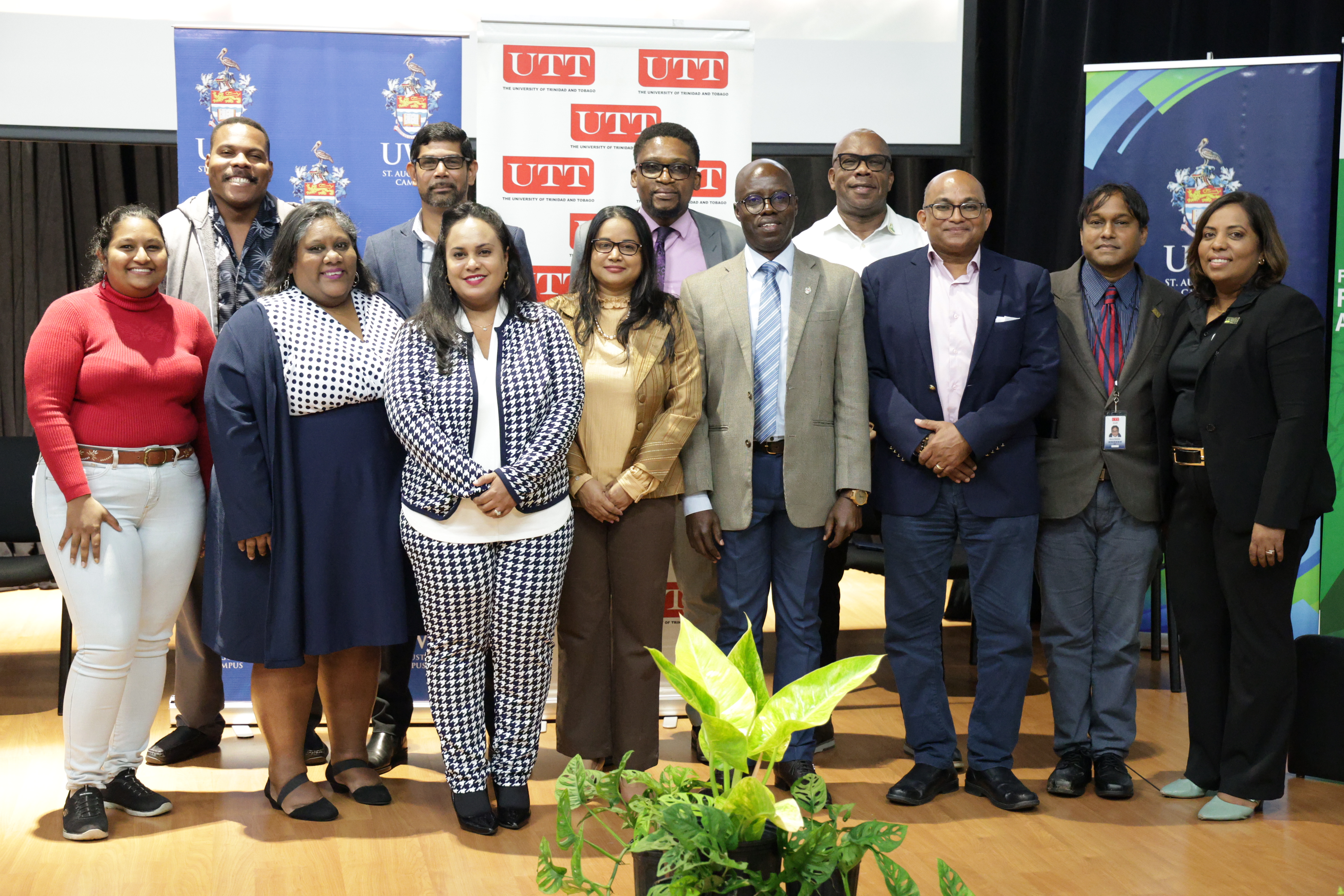
Group photo of panelists and key contributors at the public education symposium, “The Giant African Snail: Friend or Foe – Exploring Risks, Roles, and Resources,” held on July 24 at The University of the West Indies, St. Augustine, School of Education Auditorium.
Noting that the snail ranks amongst the top 100 invasive species in the world, Deputy Principal at The UWI, Prof. Derek Chadee, called on attendees at the symposium to act not just in urgency to the snail invasion but also in unity. Professor Chadee elaborated, “The GAS, once a curiosity, has far outgrown the simple label of persistent front or backyard pest in our gardens. In many Caribbean territories, including Trinidad and Tobago, farmers have reported significant crop losses, and there have been associated high annual control costs for regional governments.”
Warning the public that the snail will compromise the region’s goals of food security and economic stability if left unmanaged, he encouraged the symposium’s attendees to engage directly with each other and to continue their work after the symposium by engaging the public with what they learn. Professor Chadee reaffirmed The UWI’s commitment to public education, scientific outreach and collaborative researcher-community problem-solving.
In remarks on behalf of the Minister of Agriculture, Land and Fisheries, Permanent Secretary (Ag.) of MALF, Mr. Ric Javeed Ali, echoed Professor Chadee’s remarks as he indicated the snail invasion crisis requires collective, comprehensive, science-based responses rooted in community action. As he gave a reminder that the snail’s presence can undermine food security, crop production, market prices, and the integrity of the systems that support agriculture, Mr. Ali used the opportunity to explain that the MALF’s strategy has evolved from eradication of the snail to long-term management.
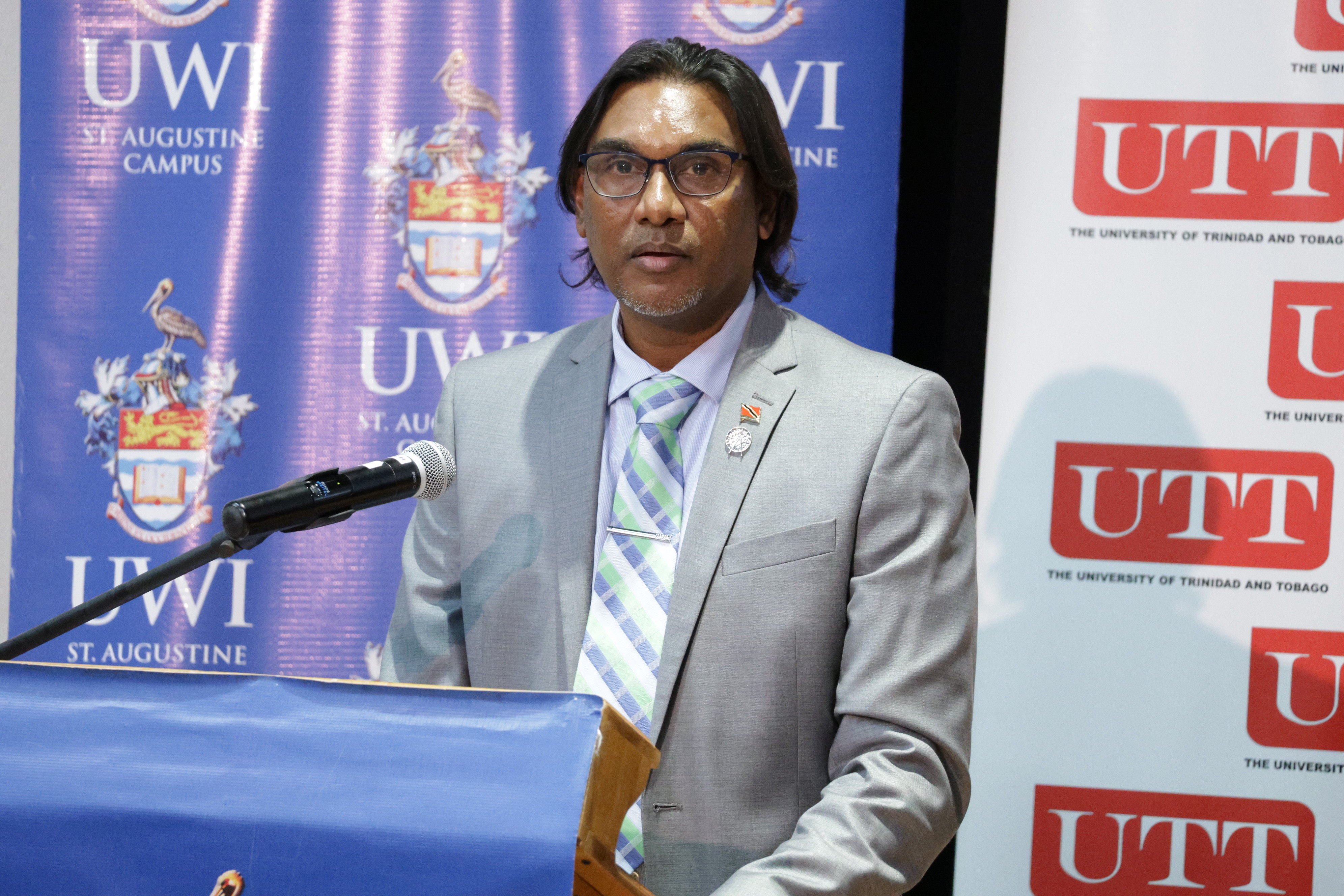
Mr. Ric Javeed Ali, Acting Permanent Secretary at the Ministry of Agriculture, Land and Fisheries, addresses attendees at the symposium “The Giant African Snail: Friend or Foe – Exploring Risks, Roles, and Resources,” held on July 24 at The UWI St. Augustine.
He further explained the shift recognizes that the GAS is an entrenched issue that requires sustained attention and action across sectors. Reflecting this, Mr. Ali said the ministry is investing in ongoing public sensitization campaigns, strengthened surveillance through reporting hotlines and direct outreach with farmers. Additionally, a key part of the MALF’s response is also the implementation of a National Bait Distribution Policy which will ensure that molluscicide baits, particularly those containing iron phosphate, are distributed in a safe, coordinated and accountable way. Furthermore, this approach emphasizes proper handling, protection of non-target species and accurate recordkeeping.
In emphasizing the critical role of universities in mitigating the threats posed by the GAS, the President (Ag.) of the University of Trinidad and Tobago, Professor Stephen Joseph, highlighted the significant and escalating dangers posed by invasive species.
"Invasive species such as GAS present urgent and expanding risks, disrupting agricultural systems, straining fragile ecosystems, and posing serious public health concerns," he noted. "Yet, as today’s theme provocatively asks, 'Friend or Foe?' we are reminded that even the most destructive species may hold hidden insights or unforeseen value, provided we commit to rigorous study." Professor Joseph underscored the pivotal role of universities in this effort, not only as hubs of research and innovation but also as key collaborators and educators for the broader public.
Dr. Marcus Ramdwar, Associate Professor at the University of Trinidad and Tobago’s (UTT) Biosciences, Agriculture, and Food Technologies Department and a lead researcher on invasive species, has called for increased public vigilance in the coming months, as the Giant African Snail (GAS) enters its peak reproductive period during the rainy season.
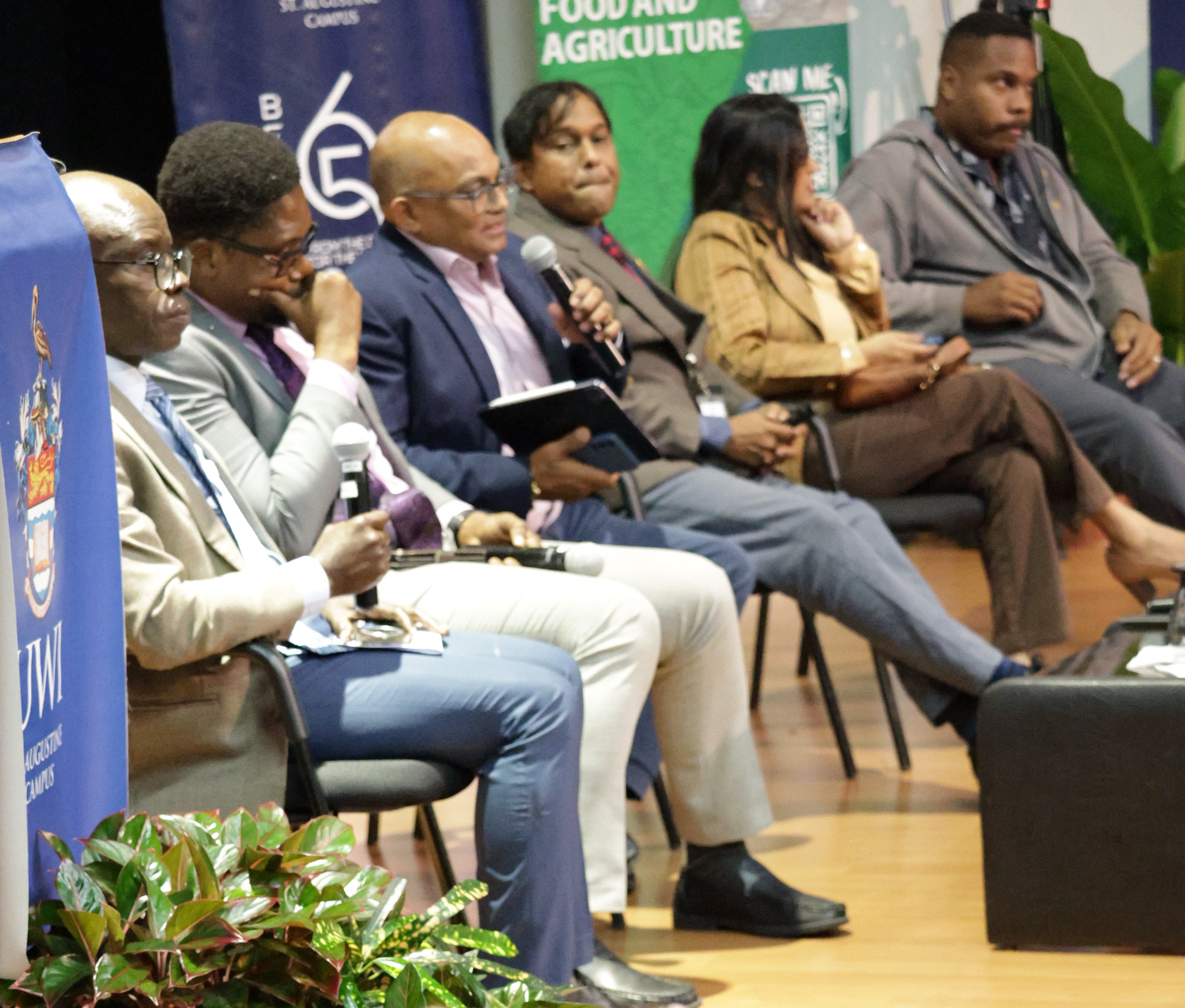
Panel discussion moderated by Professor Mark Wuddivira, featuring panelists Dr. Kegan Jones, Dr. Vidya De Gannes, Dr. Marcus Ramdwar, Mr. Ian Mohammed, and Dr. Ona Seriu-Aigbokhan, during the symposium “The Giant African Snail: Friend or Foe – Exploring Risks, Roles, and Resources,” hosted on July 24 at The UWI St. Augustine.
To support national efforts in controlling the invasive species, Dr. Ramdwar emphasized the importance of proactive eradication, particularly targeting snails before they reach breeding age. "When you encounter a snail roughly the size of a matchbox, you can be certain it is sexually mature," he explained. "The key is to prevent them from reaching reproductive capacity. Within four to five months of hatching, they are already capable of breeding." Dr. Ramdwar urged the public to actively monitor and eliminate snails in their yards, stressing that early intervention is critical to curbing population growth.
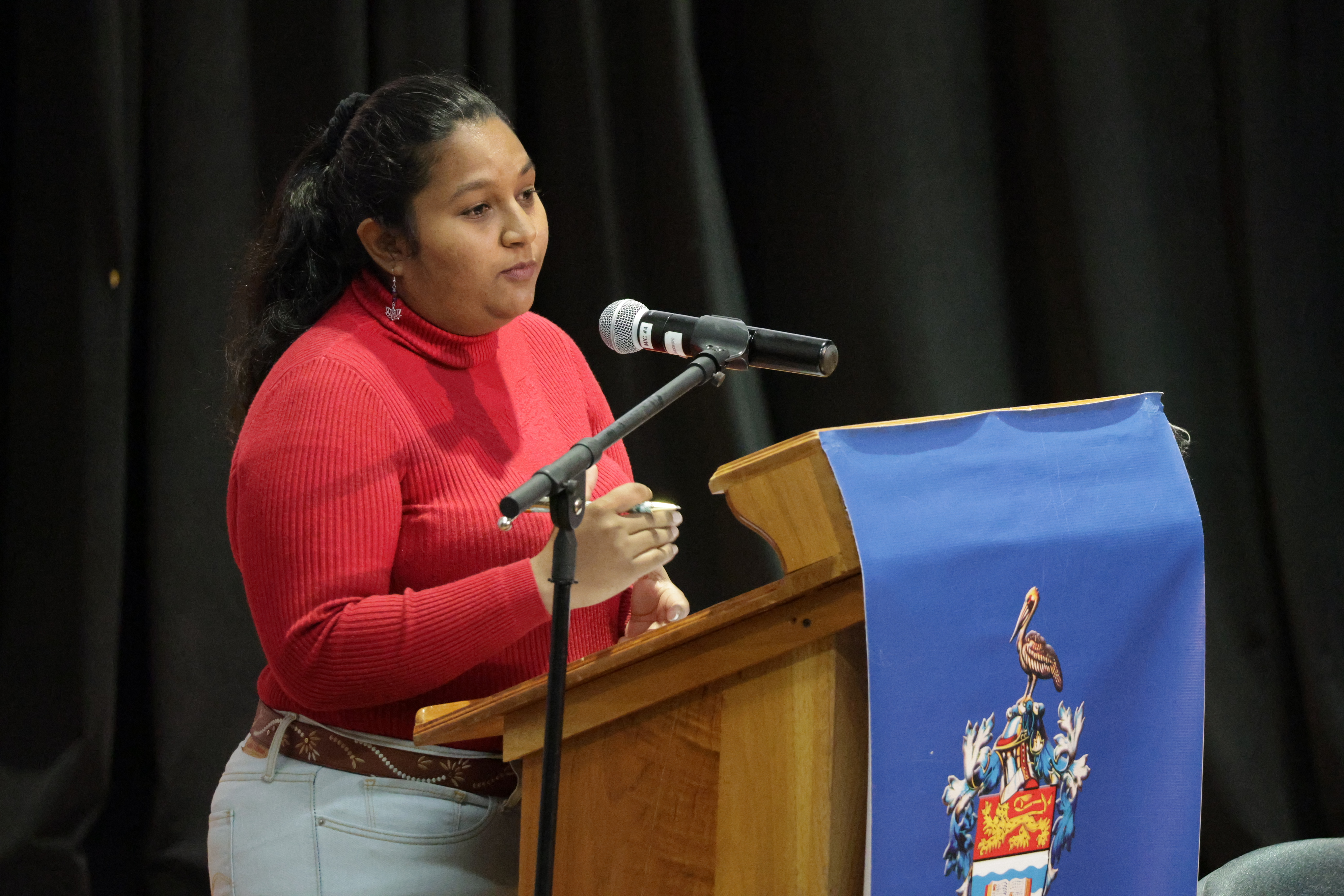
Ms. Dhaatrie Rampersad, representing the voice of the farming community, delivers remarks at the public education symposium, “The Giant African Snail: Friend or Foe – Exploring Risks, Roles, and Resources,” held on July 24 at The UWI St. Augustine.
In presenting on the topic of “From Pest to Potential Resource,” Dr. Vidya De Gannes, lecturer in The UWI’s Department of Food Production within the Faculty of Food and Agriculture, underscored the growing body of global research focused on developing value-added products from the GAS. She noted that while exploratory work is underway internationally into the snail’s potential use in food products, animal feed and even skincare, such research remains cautious and highly controlled. Dr. De Gannes firmly warned the public against any independent use of the snails, stressing that individuals should first consult with local public health authorities before considering any application.
Riding on the potential wave of moving from pest to possibilities, Professor Mark Wuddivira, Dean of the Faculty of Food and Agriculture at The UWI and moderator of the symposium’s panel discussion, stressed the need for unconventional strategies in managing the Giant African Snail, an invasive species with significant implications for food security and public health.
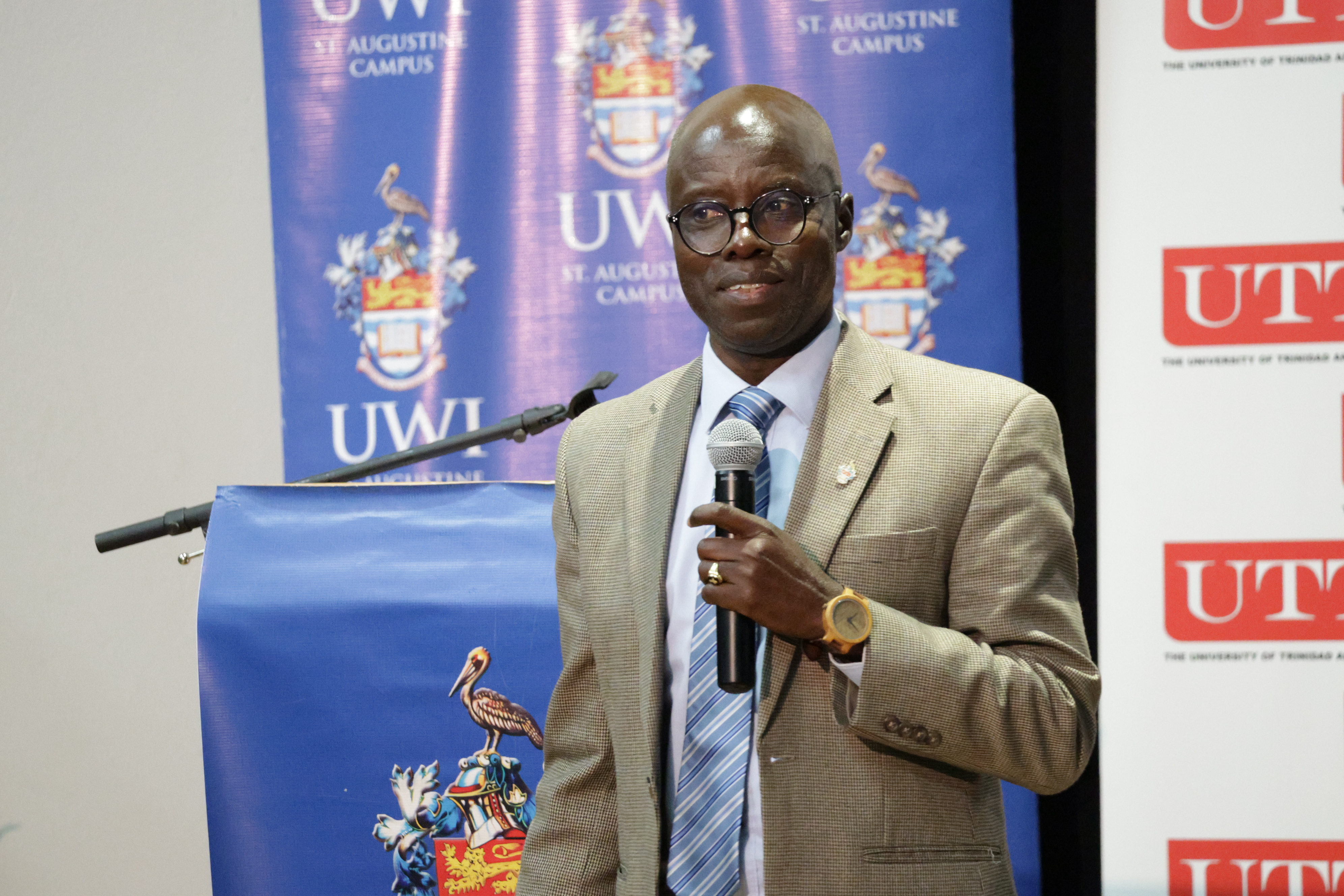
Professor Mark Wuddivira, Dean of the Faculty of Food and Agriculture, delivers opening remarks at the symposium “The Giant African Snail: Friend or Foe – Exploring Risks, Roles, and Resources,” hosted on July 24 at The UWI St. Augustine’s School of Education Auditorium.
He argued that through integrated approaches, the GAS could be transformed from a pest into a viable resource, supporting sustainable livelihoods and circular economy initiatives. However, he emphasized that such solutions require strong collaboration among researchers, policymakers, and local communities to shift the paradigm from challenge to opportunity. "We must think beyond traditional methods," Professor Wuddivira noted. "By working collectively, we can unlock the potential of this species while mitigating its risks."
END
About The University of the West Indies
The University of the West Indies (The UWI) is the Caribbean’s premier higher education institution and one of only two regional universities in the world. With five campuses across the English-speaking Caribbean and global centres in partnership with universities in North America, Latin America, Asia, Africa, and Europe, The UWI continues to be a beacon of academic excellence, research innovation, and societal impact. Consistently ranked among the world’s best by Times Higher Education (THE), The UWI is a global leader in addressing critical challenges, including climate change, sustainability, and development.
As The UWI St. Augustine Campus celebrates its 65th anniversary in 2025 under the theme Beyond 65: From the Caribbean, For the World, it pays tribute to its Caribbean roots while highlighting its contributions to solving global challenges. This milestone underscores the campus's significant role in producing ground-breaking research and fostering talent that transcends regional boundaries to shape a better world. The UWI St. Augustine’s researchers, academics, and graduates continue to make an international impact, exemplifying the university’s mission to serve the region while influencing the world.
Learn more at www.uwi.edu
Contact
Marketing and Communications Department
- Tel.: (868)-662-2002 ext.2013/2014
- Email: marketing.communications@sta.uwi.edu

The University of the West Indies
St Augustine, Trinidad and Tobago
Tel: (868) 662-2002 | Fax: (868) 663-9684
© 2004 -
http://www.sta.uwi.edu. All Rights Reserved.
Disclaimer | Privacy Statement
