

News Releases
UWI Diplomatic Academy Training Strengthens Protocol Capacity of RSS
For Release Upon Receipt - March 13, 2026
St. Augustine
St. Augustine, Trinidad and Tobago – March 13, 2026 – The University of the West Indies (The UWI) St. Augustine Campus, Institute of International Relations’ (IIR) Diplomatic Academy of the Caribbean (DAOC) recently trained twenty-nine Regional Security System (RSS) Headquarters’ staff members, upgrading their protocol skills to equip them to perform protocol-related duties flawlessly and professionally. In this regard, the DAOC customized the curriculum of its flagship training module titled Protocol and Diplomacy: A Guide for the Modern Professional.
The Diplomatic Academy delivered this six-day, virtual training consecutively to two cohorts of staff. Comprising 15 participants, Cohort One was trained from February 19th to 20th and February 23rd to 26th 2026. Comprising 14 participants, Cohort Two was trained from March 2nd to 6th and March 9th , 2026.
The training was driven by seminar-oriented lectures, which incorporated case studies, small group exercises and a roundtable panel, led by experts in conference management in respect of intergovernmental organizations. The module hinged on five core themes: Diplomacy; Protocol; the Role of the RSS and the Protocol Department; Planning Events; and Corporate/Business Etiquette.
“We designed this customized module to suit the particular protocol-related training needs of RSS Headquarters, pursuant to this Barbados-based intergovernmental defense and security organization’s request for our training services,” said the DAOC’s Manager Dr. Nand C. Bardouille. He added: “It is a singular honour for the DAOC to have been entrusted with training Cohorts one and two, equipping participants with practical tools and real-world insights in respect of protocol and diplomacy to strengthen organizational capacity and impact. The DAOC is indeed very grateful to RSS Headquarters’ leadership for selecting us to train members of staff drawn from a cross-section of departments.”
Upon the conclusion of this training, RSS Headquarters’ leadership conveyed the following: “In a world where global security challenges demand collaboration, well-coordinated engagement with international partners remains a key ingredient to success. The Regional Security System is proud to have engaged with the DAOC to improve our staff competencies in diplomacy and protocol — an essential pillar in our stakeholder engagement strategy. This training marks a milestone in strengthening the region’s diplomatic and professional capacity.”
The module’s Lead Facilitator Ms. Gail P. Guy, a retired Diplomat and Protocol Consultant, said: “At the end of their respective six days of training, cohorts one and two of the RSS Headquarters’ staff were desiring way more than could be contained in the time that was allotted. They desired a deeper dive into the legal structure within which their mandate is generated. Their activity on meeting and conference management and the related roundtable panel discussion generated the kernel of a set of standard operating procedures which have immediate utility on their return to duty.”
The teaching team also comprised the module’s co-facilitators: Ms. Marise Warner, an Attorney-at-law and International Law Specialist and Ms. Keisha Rochford-Hawkins, Certified International Etiquette and Protocol Consultant. This team’s delivery of the module curriculum was complemented by the roundtable panel — held virtually — titled ‘Meeting Execution in Multilateral Organizations’. The panel, convened for each cohort, was held on February 26th and March 9th respectively. It featured the following line-up of experts:
Experts’ Panel for Cohort One (February 26th )
Ms. Sandra Basheer, Event Management Consultant and Trainer.
Mr. Jake Salloum, Consultant – Conference, Office of the Secretary General, Association of Caribbean States (ACS) Secretariat
Experts’ Panel for Cohort Two (March 9th )
Ms. Sandra Guaqueta, Acting Director, Department of Conferences and Meetings Management, Organization of American States General Secretariat.
Mr. Jake Salloum, Consultant – Conference, Office of the Secretary General, ACS Secretariat.
The IIR Director, Dr. Abdul Knowles, who delivered remarks during the module’s opening ceremony for each cohort, noted: “Given all the recent current events occurring regionally and internationally, the knowledge and practical skills the RSS Headquarters’ staff members gained through active participation in all aspects of the Protocol and Diplomacy module offered by the DAOC is fundamental for converting state and regional resources into influence.”
In feature remarks delivered at the closing ceremony for each cohort, His Excellency Dr. Paul Byam, Director of Bilateral Relations, Ministry of Foreign and CARICOM Affairs of Trinidad and Tobago, placed an emphasis on the following: “Protocol, as we generally understand it, brings structure, form, and decorum to state ceremonies, reliability to forms of governance at the most basic level, and trust, dependability, cordiality and respect to negotiations. Alternatively, the absence of protocol and diplomacy from our general conduct at home and abroad invites disruptive elements into the world order, that may cause negotiations to flounder and fail, and may even bring otherwise resolvable situations to ruin.”
In recognition of the learning-related achievement of the two cohorts, all participants were conferred with DAOC Certificates of Training.
In remarks delivered on behalf of the two cohorts’ module graduates, class representatives conveyed that the module was “exceptionally well structured.” In reference to its five core themes, they characterized the training as “enlightening and thought provoking.”
Dr. Bardouille congratulated module graduates for having completed their course of studies successfully, underscoring that these new skills will redound to the benefit of RSS Headquarters regarding the operationalization of its mandate. He also called attention to the importance of the skill-set that the module focuses on “in an era where international politics/diplomacy is increasingly more complex and unpredictable for the small states of our region.”
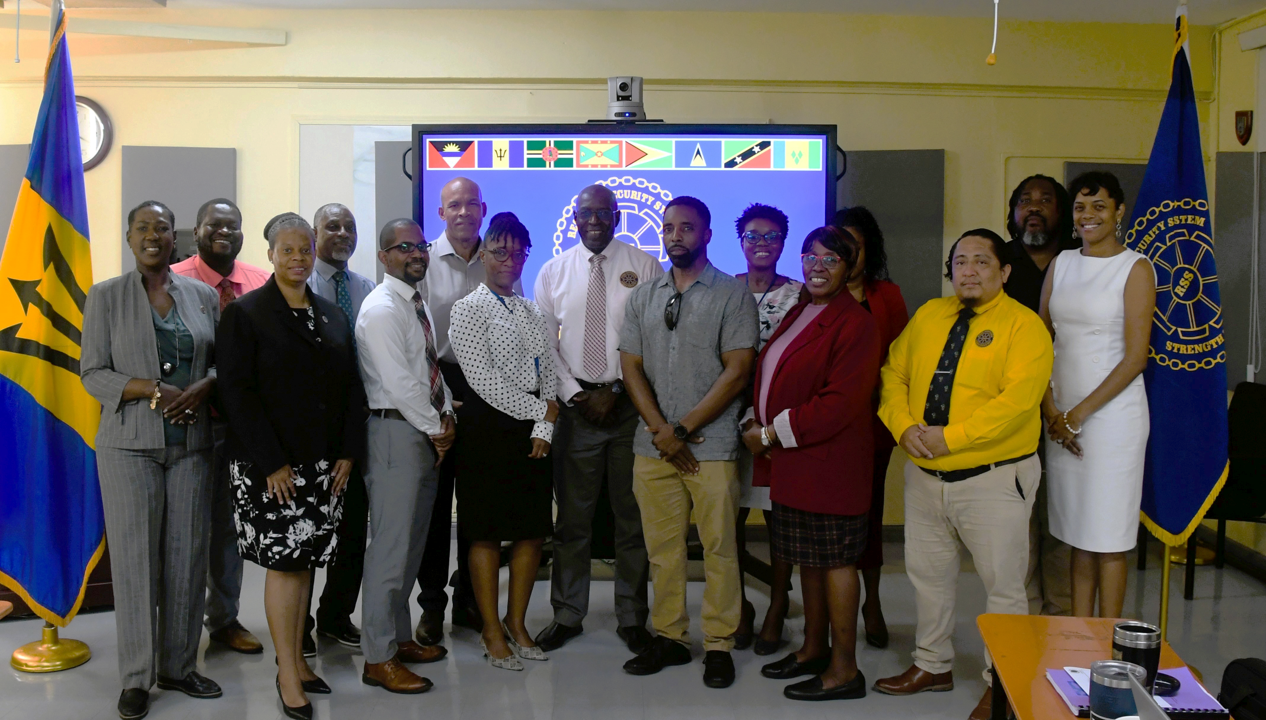
Cohort 1 of staff members from the Regional Security System Headquarters who participated in the Diplomatic Academy of the Caribbean virtual training module titled “Protocol and Diplomacy: A Guide for the Modern Professional,” held from February 19th –20th and February 23rd –26th , 2026.
Photo credit: RSS Headquarters.
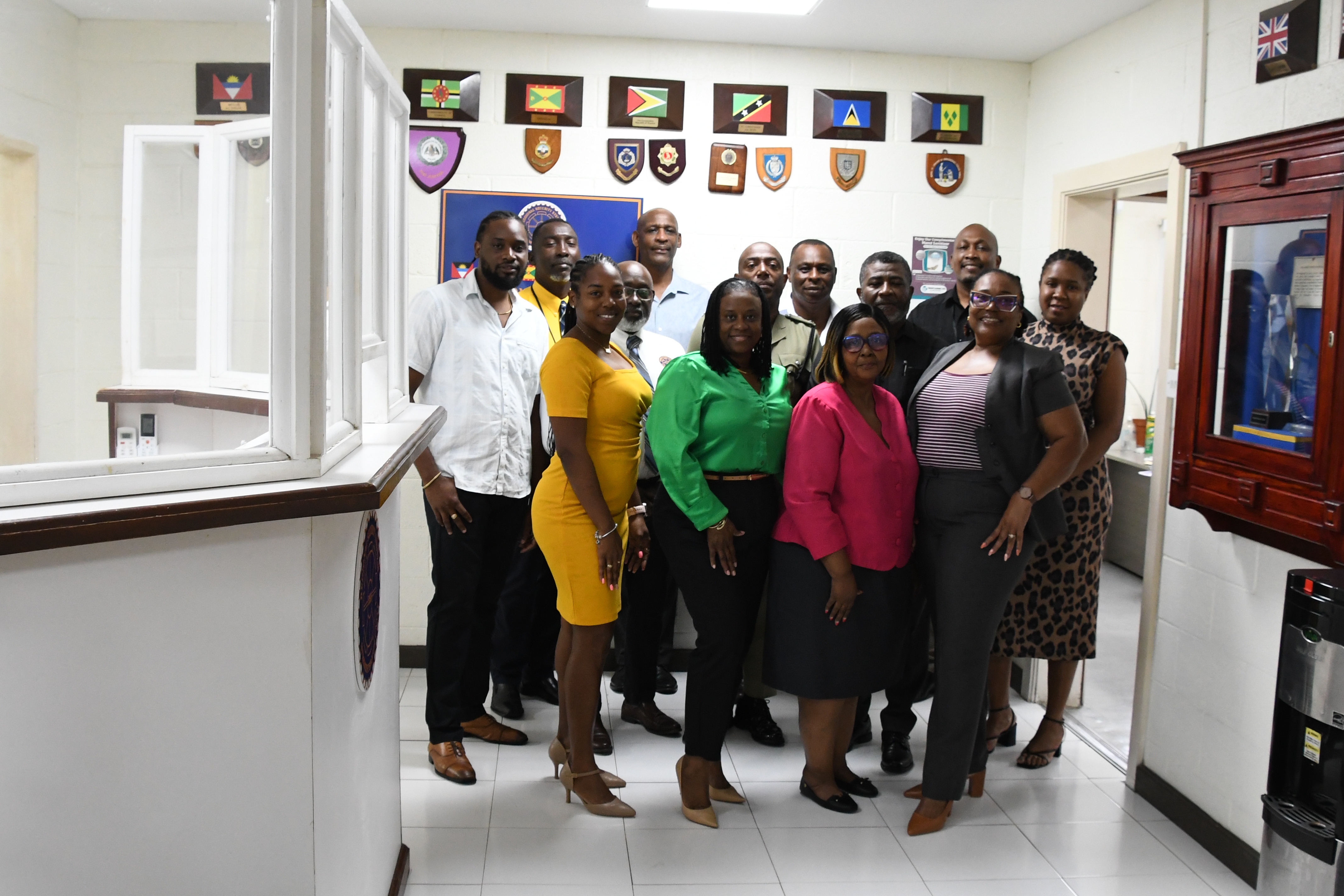
Cohort 2 of staff members from the Regional Security System Headquarters who participated in the Diplomatic Academy of the Caribbean virtual training module titled “Protocol and Diplomacy: A Guide for the Modern Professional,” held from March 2nd –6th and March 9th , 2026.
Photo credit: RSS Headquarters.
END
About The University of the West Indies
The University of the West Indies (The UWI) has played a crucial role in Caribbean development for over 75 years, consistently contributing to the improvement of the well-being of people across the region.
Established in 1948 as a university college of London in Jamaica, with just 33 medical students, UWI has grown into an internationally respected, global university with nearly 50,000 students. Today, it boasts five campuses: Mona in Jamaica, St. Augustine in Trinidad and Tobago, Cave Hill in Barbados, Five Islands in Antigua and Barbuda, and its Global Campus, along with international centres in partnership with universities across North America, Latin America, Asia, Africa, and Europe.
The UWI offers over 1000 certificate, diploma, undergraduate and postgraduate degree options in Culture, Creative and Performing Arts, Food and Agriculture, Engineering, Humanities and Education, Law, Medical Sciences, Science and Technology, Social Sciences, and Sport. As the leading university in the Caribbean, it is home to the largest pool of intellect and expertise in the region, dedicated to addressing the critical issues facing both the Caribbean and the wider world.
Validated by its inclusion in the Times Higher Education (THE) annual rankings since 2018, The UWI has affirmed its position as one of the top universities globally. It stands out as the only English-speaking institution in the Caribbean featured in four of THE's prestigious ranking lists. The World University Rankings evaluate over 2,000 research-focused universities worldwide, while the Golden Age University Rankings highlight institutions established between 50 and 80 years ago. The Latin America Rankings focus specifically on universities within Latin America and the Caribbean. Additionally, the Impact Rankings assess universities based on their contributions to the United Nations’ Sustainable Development Goals (SDGs).
This recognition has also springboarded the establishment of The UWI’s International School for Development Justice (ISDJ), a global online graduate business school aimed at preparing future leaders for sustainable development.
The UWI is an SDG-engaged university consistently recognised among the best in the world. Discover more at www.uwi.edu.
Contact
Marketing and Communications Department
- Tel.: (868)-662-2002 ext.2013/2014
- Email: marketing.communications@sta.uwi.edu

The University of the West Indies
St Augustine, Trinidad and Tobago
Tel: (868) 662-2002 | Fax: (868) 663-9684
© 2004 -
http://www.sta.uwi.edu. All Rights Reserved.
Disclaimer | Privacy Statement
