

News Releases
TT$9 Million to Transform Research into Solutions: The UWI Backs 11 High-Impact Projects
For Release Upon Receipt - August 19, 2026
St. Augustine
ST. AUGUSTINE, Trinidad and Tobago — 19 August 2026: “The RDI Fund was established with a clear purpose: to support high-quality research and development that moves beyond knowledge generation to create demonstrable impact,” said UWI St. Augustine Campus Principal, Professor Rose-Marie Belle Antoine, in her opening remarks at the RDI Fund Orientation Session held on August 12, 2026.
With this vision, The University of the West Indies (The UWI), St. Augustine Campus has awarded approximately TT$9 million to eleven high-impact research projects through its RDI Fund, strengthening the Campus’s commitment to research that delivers meaningful benefits to Trinidad and Tobago and the wider Caribbean.
Professor Antoine, who also serves as Chairperson of the RDI Technical Evaluation Committee, described the investment as an important milestone for the successful researchers and the Campus's broader research and innovation agenda.
“Research has always been at the heart of what we do at The UWI St Augustine. Beyond producing knowledge and developing expertise, we have a long tradition of research that anticipates emerging challenges while responding to the needs of our societies.”
Supported by the Government of Trinidad and Tobago, the RDI Fund enables researchers to develop innovative, evidence-based responses to pressing national challenges while strengthening connections between research, government, industry, communities and other stakeholders.
The eleven funded projects span climate resilience, renewable energy, agriculture and food security, artificial intelligence, robotics, waste management, public health, education and economic diversification.
Research addressing national priorities
Among the funded projects is H2-TTransform, led by Dr. Graham King of the Department of Mechanical and Manufacturing Engineering, which is developing a testbed and proof-of-concept electrolyser for climate-resilient green hydrogen production in Trinidad and Tobago.
Agriculture and food security are also prominent areas of research. Dr. Romina Umaharan of The UWI's Cocoa Research Centre is leading research to overcome the 'Witches' Broom Curse' and build a climate-resilient cocoa industry, while Professor Arvind Singh is leading renewable-energy-driven agricultural engineering research.
Professor Rohanie Maharaj is researching bio-based edible coatings to reduce postharvest losses, while Dr. Wendy-Ann Isaac's SCALe-UP project explores sustainable applications for the underutilised Giant African Snail in climate-resilient agriculture and enterprise development. Dr. Nigel Jalsa is developing environmentally friendly solutions for Giant African Snail control and controlled-release fertilisers.
The investment in emerging technologies includes AI4SIDS, led by Dr. Letetia Addison, which is developing an AI-driven climate resilience platform for Small Island Developing States, and research led by Dr. Craig Ramlal towards establishing a Caribbean autonomous systems and robotics industry.
Education, health and environmental sustainability are also represented. Dr. Phaedra S. Mohammed is leading LITERACY, which explores intelligent tutoring systems to enhance reading attainment among Caribbean youth. Dr. Shalini Pooransingh is examining non-communicable diseases and climate-sensitive food insecurity, while Dr. Akeem Mohammed is leading BioREFINE-XG, focused on developing a national waste-to-value chain roadmap for Trinidad and Tobago.
From research to measurable impact
The significance of the RDI Fund extends beyond funding individual research projects. It represents an investment in the capacity of researchers to translate knowledge into solutions that can benefit society.
Professor Antoine challenged the awardees to consider from the outset who will benefit from their research, how success will be demonstrated and how the benefits can extend beyond the life of the grant.
Managed within the St. Augustine Centre for Innovation and Entrepreneurship (STACIE), the RDI Fund is expected to support research that can influence policy and practice, strengthen communities and institutions, generate innovation and intellectual property, create opportunities for commercialisation and provide evidence to address significant societal challenges.
Emphasising the importance of keeping intended beneficiaries at the centre of the research process, she urged researchers:
“Do not wait until the end of the project to begin thinking about outcomes. Regularly assess whether your outputs are being used, whether stakeholders are being reached, and whether there are opportunities to strengthen the value of the work being undertaken.”
Fund will support researchers in mobilising and translating promising research outcomes into practical applications and further opportunities for development.
As the projects advance, The UWI will share their progress, achievements and emerging outcomes, demonstrating how research at the St. Augustine Campus is helping to move knowledge from the academic environment into practical solutions and measurable impact.
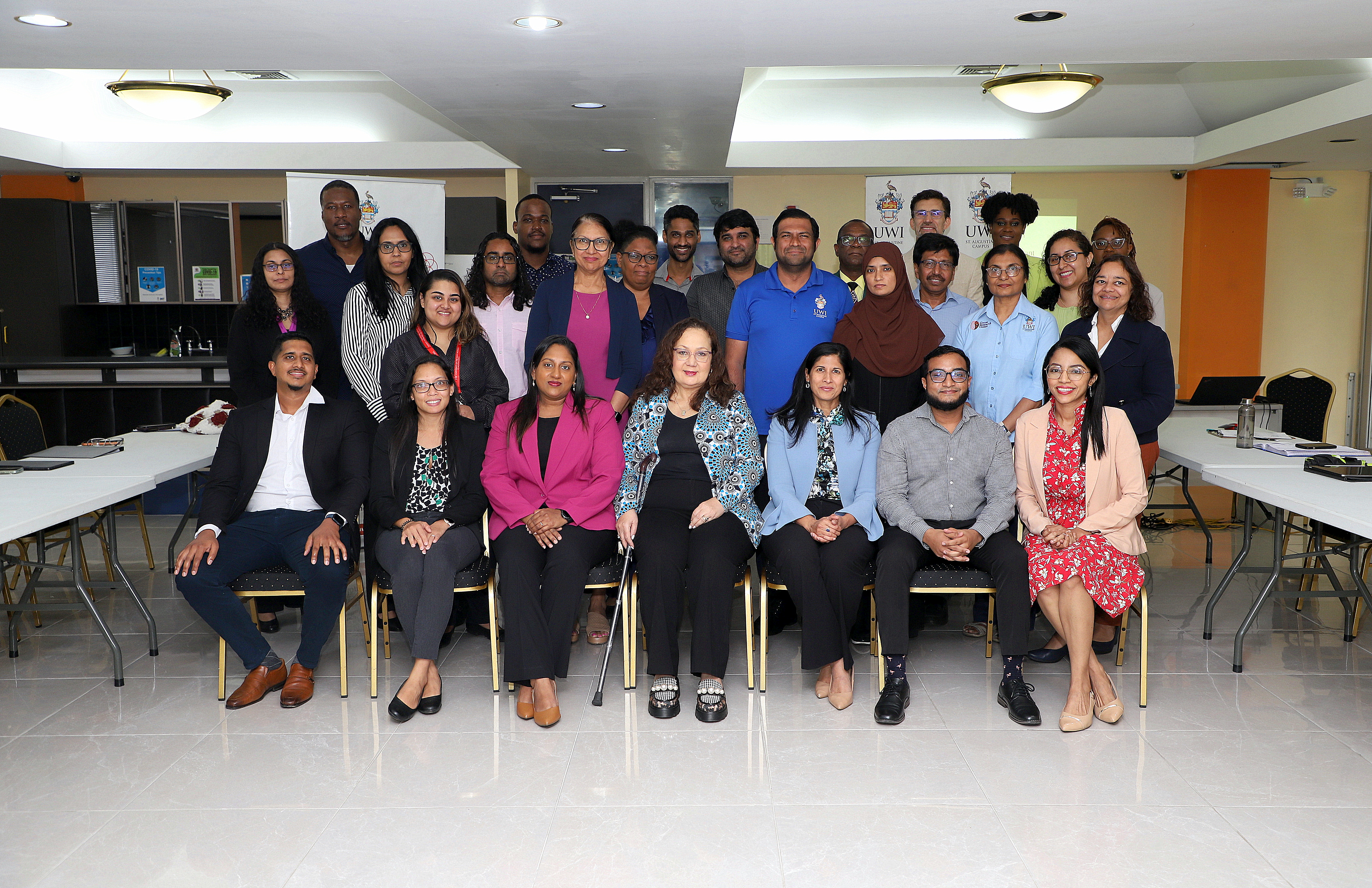
Photo 1 – Group Photo UWI researchers and stakeholders gathered during a recent engagement focused on research, collaboration and addressing issues of national and regional importance.

Photo 2 – Campus Principal The UWI St. Augustine Campus Principal, Professor Rose-Marie Belle Antoine, delivers remarks during the recent engagement, highlighting the University’s commitment to research, collaboration and addressing issues of national and regional importance.
END
About The University of the West Indies
The University of the West Indies (The UWI) has played a crucial role in Caribbean development for over 75 years, consistently contributing to the improvement of the well-being of people across the region.
Established in 1948 as a university college of London in Jamaica, with just 33 medical students, UWI has grown into an internationally respected, global university with nearly 50,000 students. Today, it boasts five campuses: Mona in Jamaica, St. Augustine in Trinidad and Tobago, Cave Hill in Barbados, Five Islands in Antigua and Barbuda, and its Global Campus, along with international centres in partnership with universities across North America, Latin America, Asia, Africa, and Europe.
The UWI offers over 1000 certificate, diploma, undergraduate and postgraduate degree options in Culture, Creative and Performing Arts, Food and Agriculture, Engineering, Humanities and Education, Law, Medical Sciences, Science and Technology, Social Sciences, and Sport. As the leading university in the Caribbean, it is home to the largest pool of intellect and expertise in the region, dedicated to addressing the critical issues facing both the Caribbean and the wider world.
Validated by its inclusion in the Times Higher Education (THE) annual rankings since 2018, The UWI has affirmed its position as one of the top universities globally. It stands out as the only English-speaking institution in the Caribbean featured in four of THE's prestigious ranking lists. The World University Rankings evaluate over 2,000 research-focused universities worldwide, while the Golden Age University Rankings highlight institutions established between 50 and 80 years ago. The Latin America Rankings focus specifically on universities within Latin America and the Caribbean. Additionally, the Impact Rankings assess universities based on their contributions to the United Nations’ Sustainable Development Goals (SDGs).
This recognition has also spring boarded the establishment of The UWI’s International School for Development Justice (ISDJ), a global online graduate business school aimed at preparing future leaders for sustainable development.
The UWI is an SDG-engaged university consistently recognised among the best in the world. Discover more at www.uwi.edu.
Contact
Marketing and Communications Department
- Tel.: (868)-662-2002 ext.2013/2014
- Email: marketing.communications@sta.uwi.edu

The University of the West Indies
St Augustine, Trinidad and Tobago
Tel: (868) 662-2002 | Fax: (868) 663-9684
© 2004 -
http://www.sta.uwi.edu. All Rights Reserved.
Disclaimer | Privacy Statement
