

News Releases
UWI Unveils EDGe Centre to Strengthen Caribbean Infectious Disease Surveillance and Pandemic Prep
For Release Upon Receipt - October 16, 2026
St. Augustine
ST. AUGUSTINE, Trinidad and Tobago – October 16, 2026 – The University of the West Indies (The UWI), St. Augustine Campus, on Tuesday, October 13, unveiled the vision for its One Health Molecular Epidemiology and Genomics Centre (EDGe), at the Arthur Lok Jack Global School of Business. The Centre is being developed to strengthen Trinidad and Tobago’s and the wider Caribbean’s capacity to detect, investigate and respond to emerging disease threats through research, genomic surveillance, training and regional collaboration, bringing together expertise across human, animal and environmental health.
A key component of the TT ONE LAB+ project, the EDGe Centre is a collaborative initiative designed to strengthen laboratory capacity for One Health surveillance to support pandemic prevention, preparedness and response in Trinidad & Tobago. TT ONE LAB+ is a country-led, multi-sectoral initiative of the Government of the Republic of Trinidad and Tobago, aimed at strengthening national capacity for One Health disease surveillance and the early detection of pathogens with epidemic or pandemic potential.
Funded by the Pandemic Fund, the project focuses on strengthening diagnostic and laboratory testing capabilities and building related human resource capacity. The Ministry of Health serves as the lead Beneficiary Entity, working alongside their co-Beneficiary Entities, the Ministry of Agriculture and Fisheries and The University of the West Indies, St. Augustine Campus. The Pan American Health Organization/World Health Organization (PAHO/WHO) serves as the project’s Implementing Entity.
The initiative is grounded in the One Health approach, which recognises that human, animal and environmental health are interconnected and must be addressed collaboratively to identify and manage emerging threats.
For Professor Rose-Marie Belle Antoine, Pro Vice-Chancellor and Campus Principal of The UWI St. Augustine Campus, the significance of the EDGe Centre extends beyond scientific infrastructure and technological advancement. It reflects the vital, often unseen contribution of university research to protecting lives and strengthening societies. Underscoring that emerging disease threats do not respect borders, sectors or disciplines, she highlighted the importance of sustained scientific inquiry and collaboration in strengthening public health preparedness and response.
Professor Antoine described the EDGe Centre as a continuation of the Campus’s longstanding contribution to public health, pointing to its leadership in genomic surveillance during the COVID-19 pandemic. She emphasised that the Centre builds on “decades of scholarship, research, and regional service by this campus,” reinforcing The UWI’s established capacity to address complex regional challenges.
“Every diagnostic tool or surveillance system, every public health intervention or drug, is built on years of scientific inquiry, investment in knowledge, and the dedication of researchers, some of whom have played active roles in this Centre, who are committed to understanding complex problems before solutions are even visible,” Professor Antoine said. “This goes back to the ethos of universities in strengthening societies, not only through education, but through the creation of knowledge that ultimately serves the public good.”
PAHO/WHO Representative for Trinidad and Tobago and the Dutch Caribbean Islands, Dr Gabriel Vivas Francesconi, underscored the regional and international health partnership supporting the initiative.
“This project has a huge potential to improve communicable disease surveillance for both humans and animals in Trinidad and Tobago. By strengthening diagnostic and testing capacities across sectors, TT ONE LAB+ will support earlier detection of outbreaks, more effective monitoring of diseases and antimicrobial resistance, and faster evidence-based responses to public health threats.”
PAHO/WHO’s collaboration with national institutions and The UWI is part of the wider effort to strengthen preparedness through coordinated technical support, capacity development and sustainable systems for disease surveillance and response.
Professor Christine Carrington, Director of the EDGe Centre and Professor of Molecular Genetics and Virology at The UWI, said the Centre would build regional capacity through research, training and laboratory support, guided by the One Health approach.
“Our mission is to advance Caribbean resilience and preparedness for emerging diseases through research, training and laboratory support delivered in partnership with our public health and veterinary institutions, within our One Health framework,” Professor Carrington said.
She explained that the Centre’s work would be organised around three pillars: research to understand how pathogens emerge, evolve and spread; training through technical workshops, fellowships and postgraduate study; and the development of genomic sequencing services for microbial samples from humans, animals, plants and the environment. These capabilities are intended to strengthen disease surveillance while also contributing to areas such as food safety, antimicrobial resistance, plant health and microbiome studies.
Professor Carrington noted that The UWI’s experience in establishing whole-genome sequencing capacity during the COVID-19 pandemic provided an important foundation for the Centre’s future work, including its potential to extend technical and laboratory support across the Caribbean.
The Centre’s training pillar launched with the Pandemic Preparedness and Response (PANPRO) Fellowship, bringing together nine professionals from wildlife management, veterinary services, public health, disease surveillance and emergency management. Reflecting the One Health approach, the programme is designed to strengthen multidisciplinary collaboration and equip participants with the practical skills and knowledge needed to anticipate and respond to emerging disease threats, while building Trinidad and Tobago’s capacity for future health emergencies.
Minister of Health, Dr. the Honourable Lackram Bodoe reaffirmed the Government’s commitment to strengthening national laboratory capacity and improving coordination across sectors to protect public health.
“Together, we are laying the foundation for a stronger, more coordinated, and more resilient national laboratory system, one that places the health and well-being of the people of Trinidad and Tobago at its centre,” Dr. Bodoe said.
He expressed appreciation to the Pandemic Fund and project partners for their continued support and stressed the importance of collaboration across government ministries to ensure that public resources are used effectively. Looking ahead to the Centre’s development, Dr Bodoe said he looked forward to seeing the Centre’s upgraded laboratory infrastructure formally opened in 2028, if not before.
Minister of Agriculture and Fisheries, Senator the Honourable Ravi Ratiram also underscored the importance of collaboration through the One Health approach, reaffirming the Government’s commitment to strengthening agricultural and veterinary health systems.
“Today, we are not simply unveiling a Centre. We are strengthening our ability to see threats earlier, understand them more accurately, and respond to them more effectively,” Minister Ratiram said. He added: “Trinidad and Tobago is ready to lead, and the Caribbean will be safer, healthier, and more resilient because of this.”
Beyond laboratory infrastructure, the EDGe Centre will place emphasis on developing the people and partnerships needed to sustain regional preparedness. Its training pillar will include opportunities for professionals from different disciplines and institutions to build their knowledge and work together on emerging disease threats.
Through its research, training and service activities, the EDGe Centre seeks to strengthen the Caribbean’s ability to identify disease threats earlier, generate evidence to guide public health action and coordinate responses across sectors and borders. Its development represents a significant step towards a more integrated regional approach to pandemic prevention, preparedness and response, supported by The UWI and its national, regional and international partners.
END
Notes to the Editors:
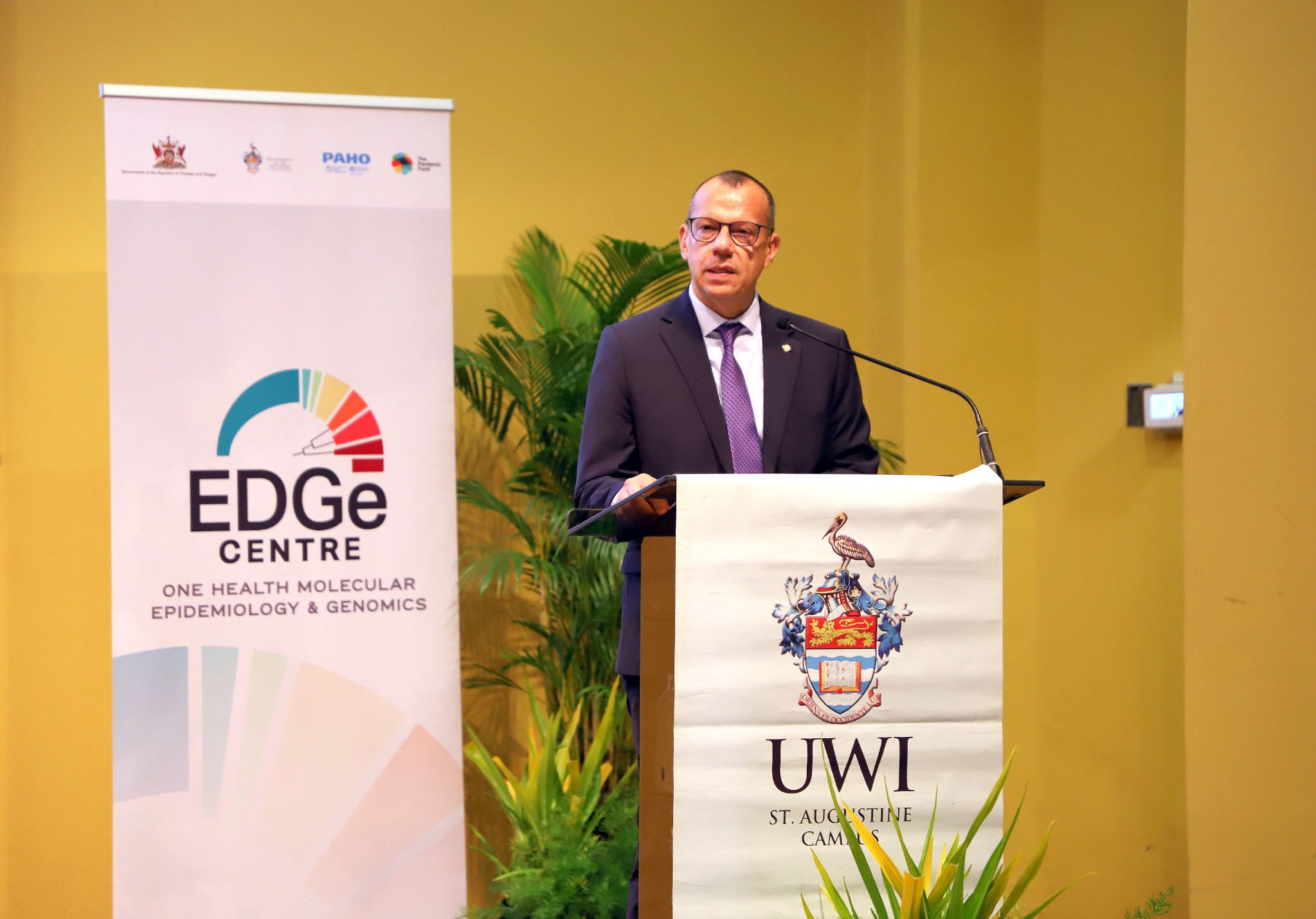
Photo 1: PAHO/WHO Representative for Trinidad and Tobago and the Dutch Caribbean Islands, Dr. Gabriel Vivas Francesconi delivers remarks during the unveiling of the vision for the One Health Molecular Epidemiology & Genomics (EDGe) Centre at The Arthur Lok Jack Global School of Business, on 13 October 2026.
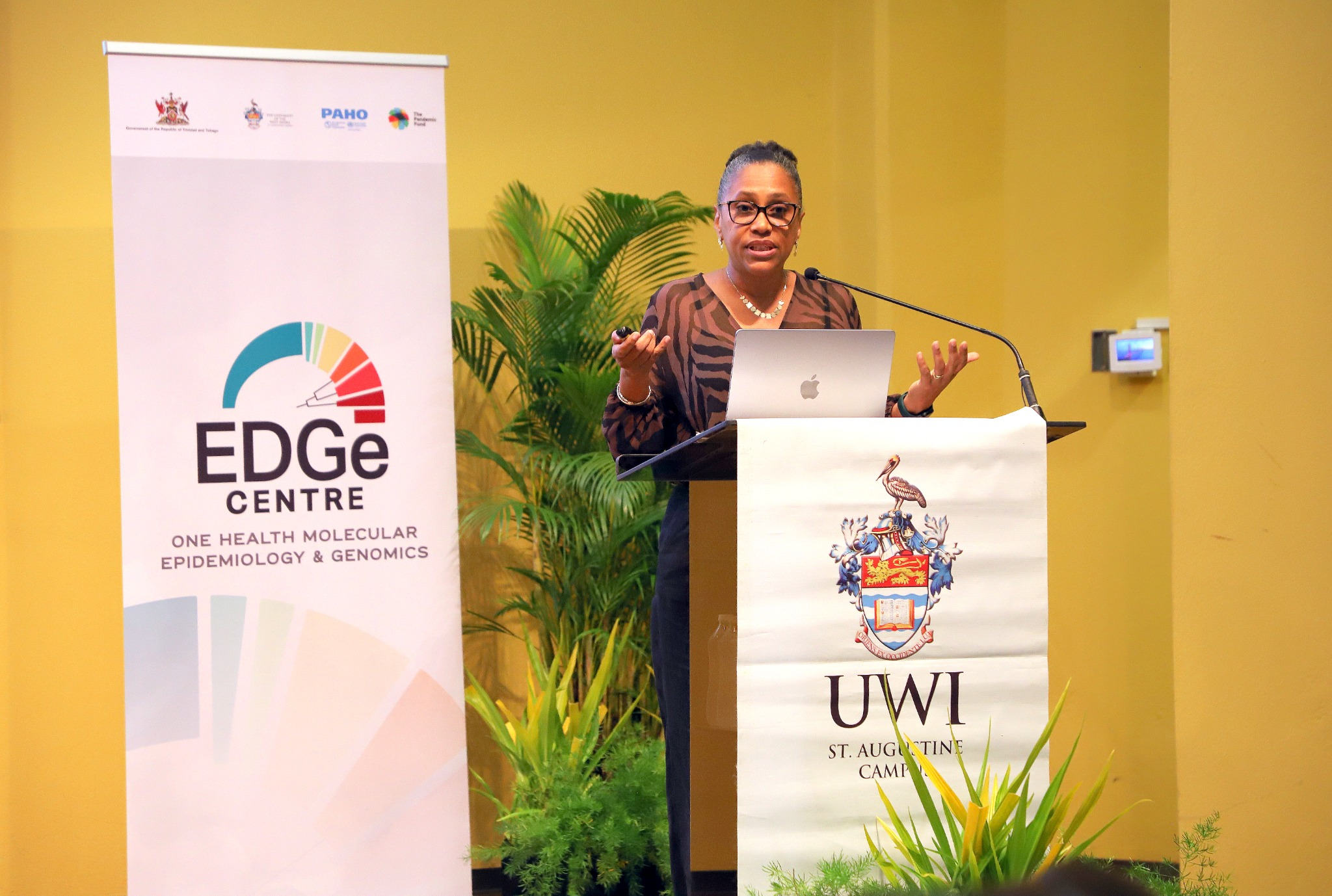
Photo 2: Professor of Molecular Genetics and Virology at the University of the West Indies and Director of the EDGe Center, Professor Christine Carrington, shares insights into the vision for the EDGe Centre, an initiative aimed at strengthening molecular epidemiology, genomics and One Health surveillance capabilities in Trinidad and Tobago.
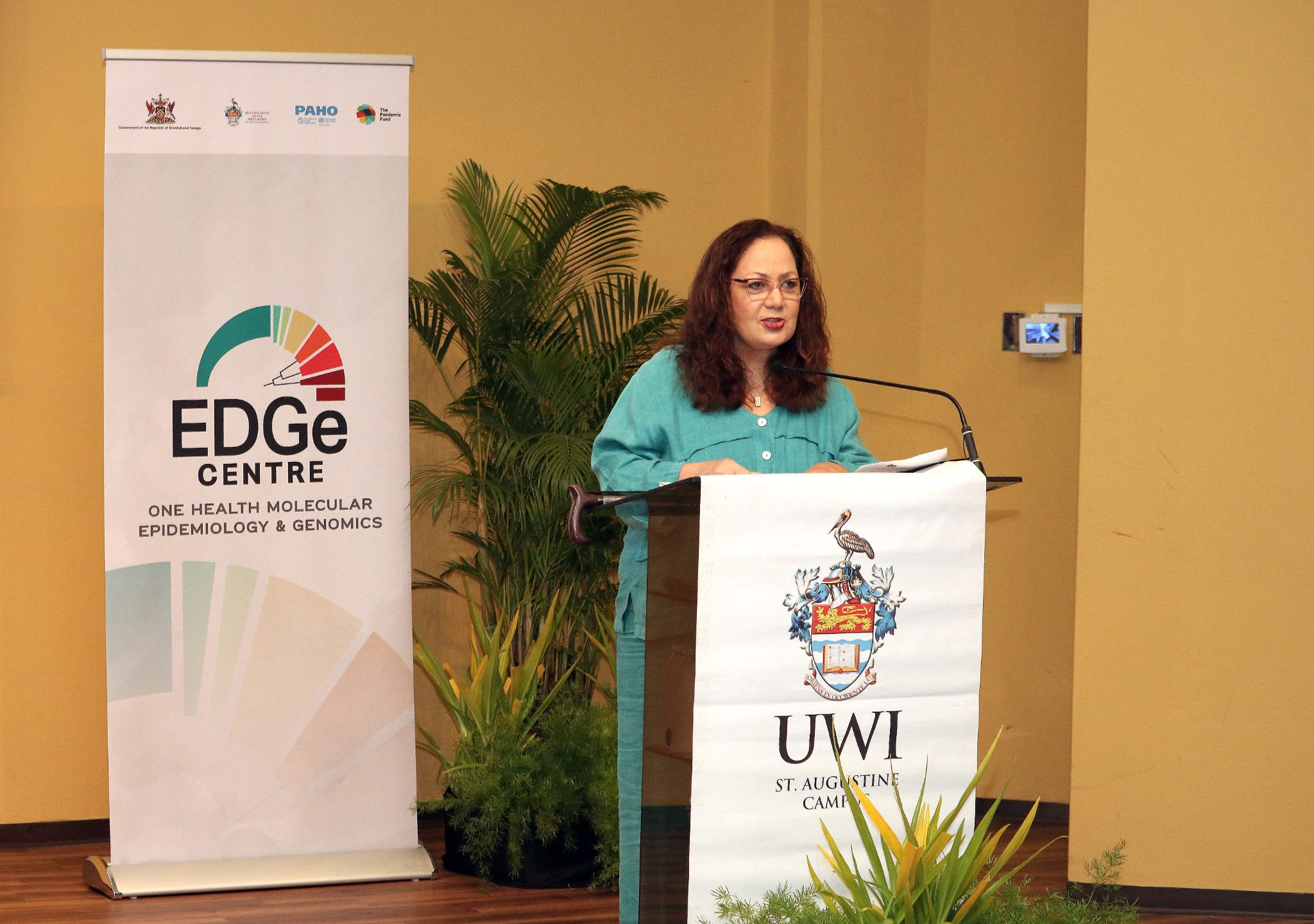
Photo 3: UWI St. Augustine Pro-Vice Chancellor and Campus Principal, Professor Rose-Marie Belle Antoine addresses attendees at the unveiling of the EDGe Centre's vision, highlighting an important step towards advancing scientific research, disease surveillance and pandemic preparedness.
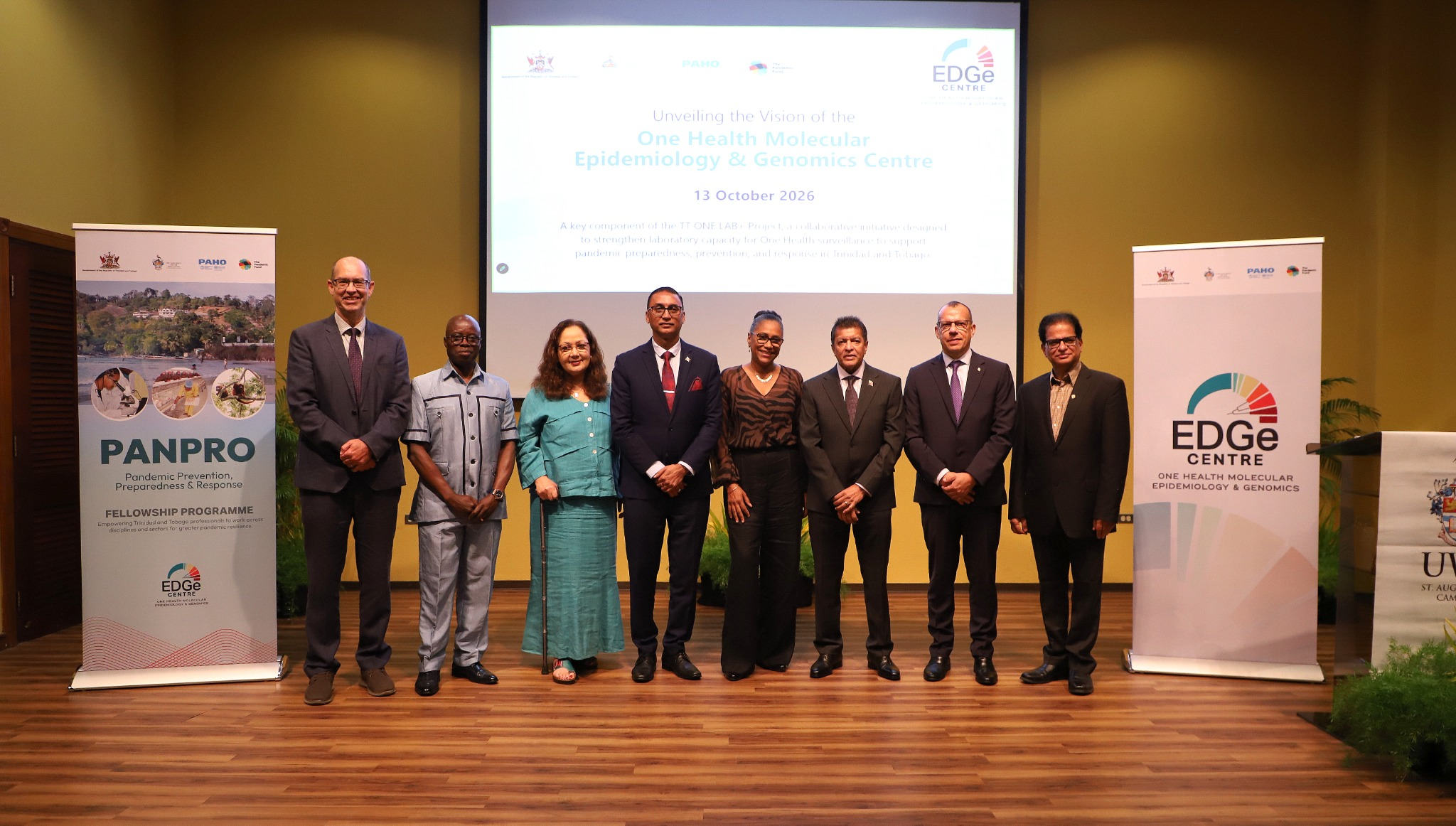
Photo 4: From left to right: Prof. Chris Oura, Prof. Mark Wuddivira, Prof Rose-Marie Belle Antoine, Senator the Honourable Ravi Ratiram, Prof. Christine Carrington, The Honourable Dr. Lackram Bodoe, MP, Dr. Gabriel Vivas Francesconi, and Professor Hariharan Seetharaman gather for a commemorative photograph at the unveiling of the vision for the One Health Molecular Epidemiology & Genomics (EDGe) Centre at The Arthur Lok Jack Global School of Business, on 13 October 2026.
About The UWI
The UWI has been and continues to be a pivotal force in every aspect of Caribbean development; residing at the centre of all efforts to improve the well-being of people across the region.
From a university college of London in Jamaica with 33 medical students in 1948, The UWI is today an internationally respected, global university with near 50,000 students and five campuses: Mona in Jamaica, St. Augustine in Trinidad and Tobago, Cave Hill in Barbados, Five Islands in Antigua and Barbuda and its Open Campus, and 10 global centres in partnership with universities in North America, Latin America, Asia, Africa and Europe.
The UWI offers over 800 certificate, diploma, undergraduate and postgraduate degree options in Culture, Creative and Performing Arts, Food and Agriculture, Engineering, Humanities and Education, Law, Medical Sciences, Science and Technology, Social Sciences, and Sport. As the Caribbean’s leading university, it possesses the largest pool of Caribbean intellect and expertise committed to confronting the critical issues of our region and wider world.
The UWI has been consistently ranked among the top universities globally by the most reputable ranking agency, Times Higher Education (THE). In the latest World University Rankings 2022, released in September 2021, The UWI moved up an impressive 94 places from last year. In the current global field of some 30,000 universities and elite research institutes, The UWI stands among the top 1.5%.
The UWI is the only Caribbean-based university to make the prestigious lists since its debut in the rankings in 2018. In addition to its leading position in the Caribbean, it is also in the top 20 for Latin America and the Caribbean and the top 100 global Golden Age universities (between 50 and 80 years old). The UWI is also featured among the leading universities on THE’s Impact Rankings for its response to the world’s biggest concerns, outlined in the 17 United Nations Sustainable Development Goals (SDGs), including Good Health and Wellbeing; Gender Equality and Climate Action.
For more, visit www.uwi.edu.
Contact
Marketing and Communications Department
- Tel.: (868)-662-2002 ext.2013/2014
- Email: marketing.communications@sta.uwi.edu

The University of the West Indies
St Augustine, Trinidad and Tobago
Tel: (868) 662-2002 | Fax: (868) 663-9684
© 2004 -
http://www.sta.uwi.edu. All Rights Reserved.
Disclaimer | Privacy Statement
