
Teaching Strategies
Effective Teaching Strategies: Leveraging Instructional Design and UDL
In today’s diverse classrooms, effective teaching strategies go beyond traditional methods. By incorporating principles from Instructional Design (ID) and Universal Design for Learning (UDL), educators can create more inclusive and impactful learning experiences. This approach ensures every student, regardless of background or learning needs, has the opportunity to succeed.
Understanding Instructional Design (ID)
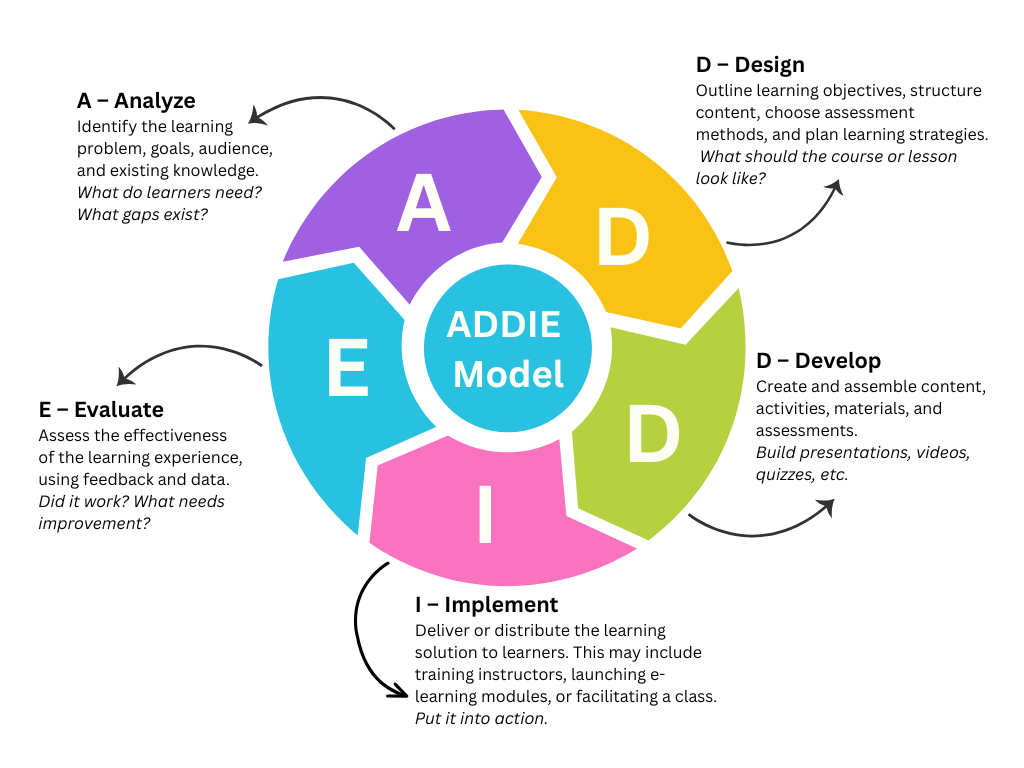
Instructional Design is the practice of creating purposeful, structured learning experiences that address diverse learner needs. One of the most widely used frameworks in this process is the ADDIE Model, which stands for Analyze, Design, Develop, Implement, and Evaluate. By following these five phases, educators can create learning environments that foster active engagement and long-term knowledge retention.
Refer to the image of the ADDIE Model for a visual overview of each stage of the instructional design process.
Universal Design for Learning (UDL)
UDL is a framework that emphasizes inclusivity and flexibility in teaching students with diverse learning needs. It emphasizes three key principles:
- Engagement – Capturing interest and motivation.
- Representation – Presenting content in multiple ways.
- Action & Expression – Allowing students to demonstrate their learning in varied formats.
Practical Strategies for Implementation
- Differentiated Instruction: Tailor content, process, and product to match student readiness and interests.
- Technology Integration: Consider tools such as interactive quizzes, digital simulations, and videos to provide varied learning materials, and by extension, mutiple pathways to learning
- Collaborative Learning: Encourage group work that promotes peer interaction and problem-solving.
By blending Instructional Design with UDL, instructors can foster an environment where all students thrive. This adaptive teaching approach not only supports diverse learning needs but also empowers learners to engage actively with the material.
For more resources on effective teaching strategies, explore our workshops and materials.