
ICT Integration
What is Educational Technology?
Educational Technology, often shortened to EdTech, is the purposeful integration of technology into teaching and learning processes. It includes not only tools and devices, but also the design, management, and evaluation of effective learning experiences.
According to the Association for Educational Communications and Technology (AECT):
“Educational technology is the ethical study and practice of facilitating learning and improving performance by creating, using, and managing appropriate technological processes and resources.”
This definition highlights that EdTech is rooted in theory, research, and evidence-based practices—not just hardware or apps.
Why does Educational Technology matter?
Educational technology supports teaching and learning in the following ways:
-
Personalizes learning – Adaptive tools adjust to learner pace and needs.
-
Boosts engagement – Games, simulations, and media-rich lessons hold attention.
-
Increases access & flexibility – Online learning platforms support anytime, anywhere learning.
-
Supports data-informed teaching – Analytics and dashboards offer feedback for improvement.
-
Promotes equity & inclusion – Assistive technologies support students with diverse needs.
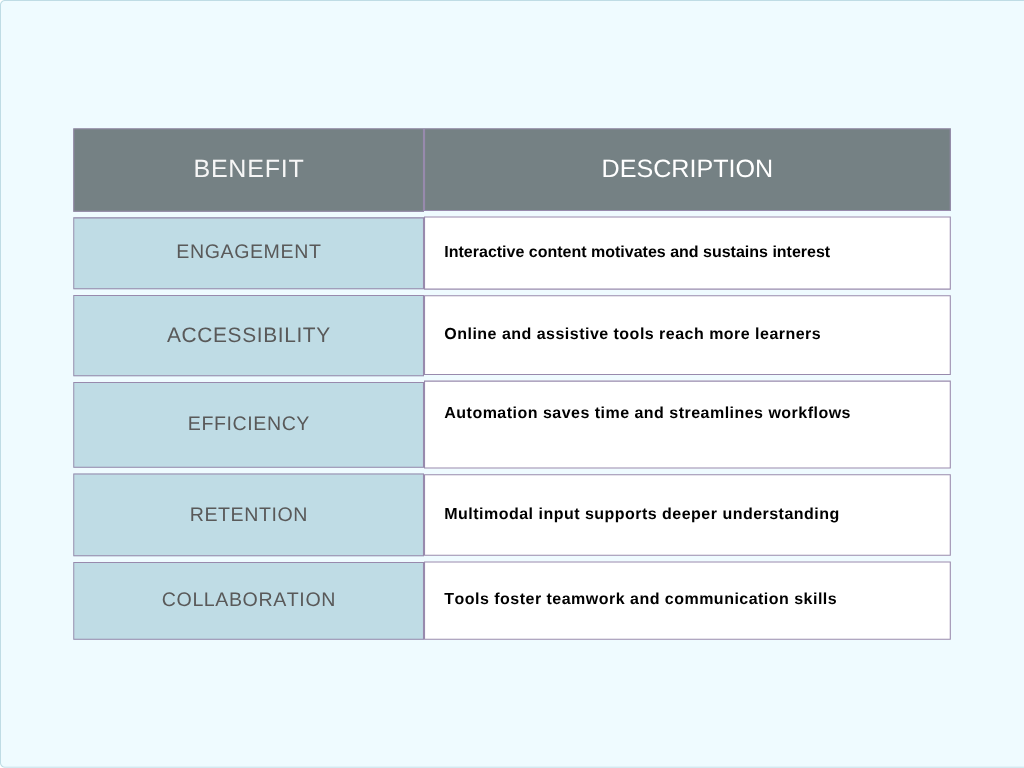
Key Components of Educational Technology
ICT Integration Models/Frameworks
ICT Integration Models/Frameworks refer to structured approaches used to guide educators in the effective and meaningful use of Information and Communication Technology (ICT) in teaching and learning. These models help teachers plan, implement, and evaluate technology-enhanced instruction by aligning ICT tools with pedagogical goals and learner needs.
Click on the module’s arrow below (>) for more information on these frameworks.
Technology Tools/ Suite
Technology Tools are software, applications, platforms, or devices used to support teaching, learning, communication, assessment, collaboration, or content creation in educational settings.
Click on the module’s arrow below (>) for more information on these tools.
Considerations for Effective Use
To implement educational technology meaningfully, educators should:
- Start with learning goals – Choose tools that align with desired outcomes
- Ensure digital equity – Provide access and support for all learners
- Build educator capacity – Offer training and ongoing professional development
- Foster responsible use – Emphasize digital citizenship, privacy, and ethics
- Evaluate effectiveness – Use data to assess and improve strategies