
What to Do Next
Receiving your CER report is the beginning of a reflective process, not the end of one. This page offers two complementary frameworks: a step-by-step guide to reading and interpreting your report, followed by CETL’s framework for managing the reflective process around it. An annotated sample report illustrates how both apply in practice.
A Five-Step Guide to Reading Your Report
1. Read the report holistically before reacting to individual items
2. Identify one strength and one area for growth per semester
3. Read the written comments with your numerical results in mind
4. Develop a simple action plan
- What specifically the data and comments suggest is the issue
- One concrete change you will trial next semester
- How you will know whether the change worked — for example, an improvement in a specific CER item in a future semester
5. Consider a CETL consultation
Annotated Sample Report
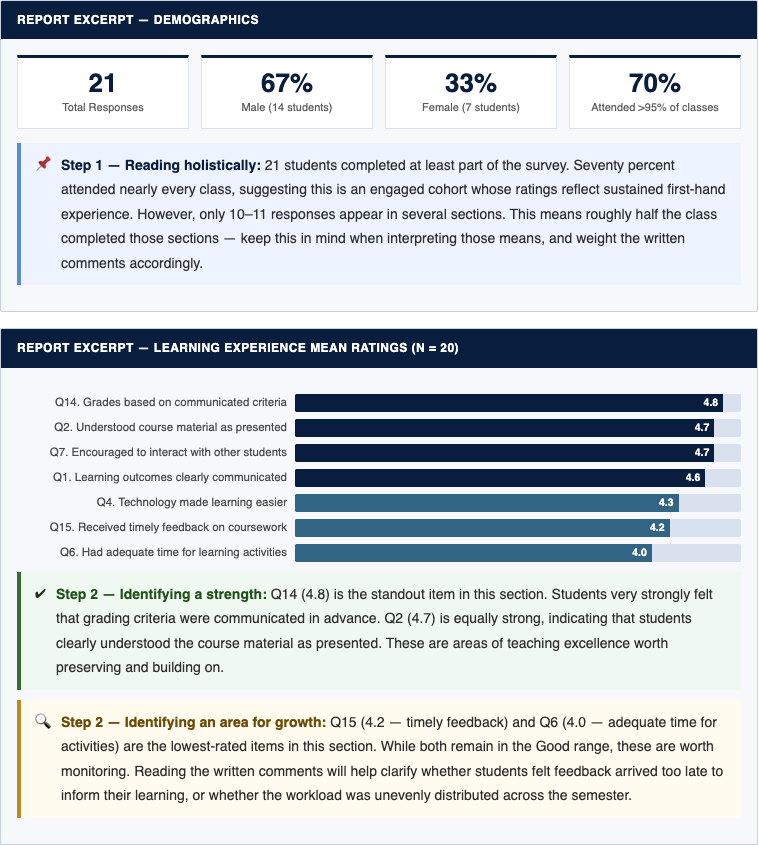
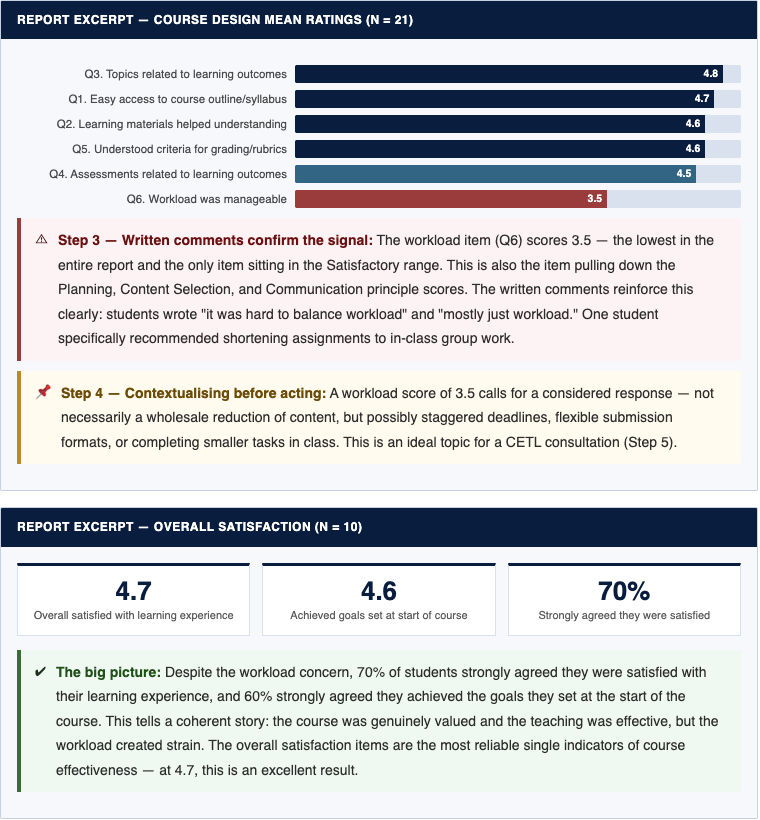
The excerpts below illustrate how the five steps above apply in practice. Annotation boxes walk through what each figure means and how a lecturer might respond to the data.
CETL’s Framework for Responding to Student Feedback
Alongside reading your report carefully, it is equally important to manage the process of engaging with feedback — particularly when comments feel personal or unexpected. CETL’s five-step framework, grounded in Rolfe’s reflective practice model, is designed to help you approach your results with a clear and open mind.