In October 2012, The UWI St Augustine Campus formally celebrated research excellence through a Research Awards Ceremony, organized under the auspices of the Office of the Campus Principal, with the generous support of the National Gas Company of Trinidad and Tobago (NGC). The Campus Principal, Pro Vice Chancellor Professor Clement Sankat, viewed this awards ceremony as a very important undertaking for this Campus. In speaking about its objectives, Professor Sankat stated quite succinctly that, “By showcasing the accomplishments of our researchers and postgraduate students, we are not only recognizing their hard work and dedication to advancing the Campus’ research agenda, we are also contributing to building an even more vibrant research community and strengthening collaborations between Faculties, UWI Campuses and our public and private sector partners”.
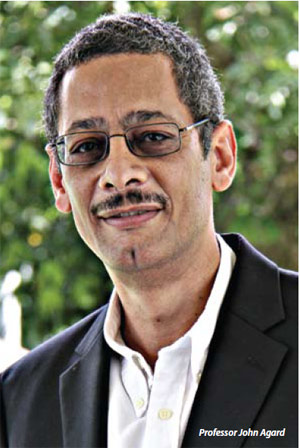
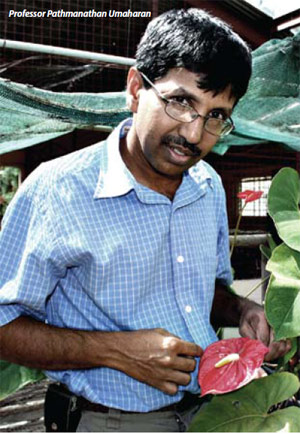 This Ceremony took place as the regional University of the West Indies was nearing the end of its 2007- 2012 strategic planning period and awards were based on the research projects, outputs and experiences of staff and students in the various faculties, research units, centres and institutes over the past three years. Award categories at the faculty level included Most Outstanding Researcher, Best Research Team (Multidisciplinary Research), and Most Productive Research Department. At the campus level, the two prestigious Campus Awards were given to Prof. Pathmanathan Umaharan for the Most Impacting Research Project and to Prof. John Agard for the Most Internationally Successful Research Project. This Ceremony took place as the regional University of the West Indies was nearing the end of its 2007- 2012 strategic planning period and awards were based on the research projects, outputs and experiences of staff and students in the various faculties, research units, centres and institutes over the past three years. Award categories at the faculty level included Most Outstanding Researcher, Best Research Team (Multidisciplinary Research), and Most Productive Research Department. At the campus level, the two prestigious Campus Awards were given to Prof. Pathmanathan Umaharan for the Most Impacting Research Project and to Prof. John Agard for the Most Internationally Successful Research Project.
Researchers who were successful recipients of grants from the first Call for Proposals of the highly competitive UWI-Trinidad and Tobago Research and Development Impact Fund (RDI Fund), were also recognized at this ceremony.
A very important aspect of the conceptualization of this Award Ceremony was the emphasis placed on recognizing the research conducted by post-graduate students and the mentorship provided by their academic supervisors. Professor Funso Aiyejina, Dean of the Faculty of Humanities and Education, felt strongly that this unique component would celebrate the purpose of our university as the preeminent institution for research and scholarship in Trinidad and Tobago and across the region. “The desire to ignite the spark of inquiry and critical thinking, to challenge our students to push the frontiers of knowledge through research and, where possible, its application, and to contribute to expanding the existing body of knowledge on any subject, particularly as it relates to the Caribbean, is what motivates many of our academics who dedicate their time, effort and energy to guiding and nurturing the more than 900 postgraduate students and young researchers at the St. Augustine Campus,” explained Dean Aiyejina.
The 2012 Research Awards Ceremony was an occasion to put the spotlight on our most outstanding graduate researchers and research mentors. These awards were presented in two categories, one for the Arts, Humanities and Social Sciences and the other for the Sciences. The awardees in the former category were Dr. Stephen Nigel Geofroy and his mentor, Mr. Carol Keller, while the awardees in the Sciences category were Dr. Albert Auguste and his mentor, Professor Christine Carrington.
Ensuring a sustainable pool of academic talent is central to building a strong research culture at The UWI St Augustine, and this will continue to be a priority as we continue to foster strong partnerships between academia, industry, civil society and government. The RDI Fund provides additional opportunities for research mentorship because it strongly encourages the participation of postgraduate students in research teams. It is about building a critical mass around key issues and having the capacity to take the research agenda forward well into the future to ensure its sustainability. RDI Fund projects bring cross-faculty research teams together to use their knowledge to address specific problems linked to national and regional development and, in so doing, help to enhance the ability of our junior researchers and postgraduate students, to compete for research funding and to execute research projects.
 The inextricable link between the university’s Teaching and Research functions must also be underscored. As in all leading universities, research and teaching sustain and fuel each other, creating a supportive environment for creativity and innovation; one that not only facilitates effective knowledge transfer, but also serves to enrich the teaching and learning experience and deepen the students’ learning outcomes. On this point, Professor Kit Fai Pun, Campus Coordinator for Graduate Studies and Research, further highlighted that “students who are actively engaged in research say that there is nothing more exciting than knowing that your lecturer is at the cutting edge of the topic being taught, and what you are learning cannot be found in any text book because the concepts are so novel, they are still being threshed out in the lab, studio or mind of the researcher”. The inextricable link between the university’s Teaching and Research functions must also be underscored. As in all leading universities, research and teaching sustain and fuel each other, creating a supportive environment for creativity and innovation; one that not only facilitates effective knowledge transfer, but also serves to enrich the teaching and learning experience and deepen the students’ learning outcomes. On this point, Professor Kit Fai Pun, Campus Coordinator for Graduate Studies and Research, further highlighted that “students who are actively engaged in research say that there is nothing more exciting than knowing that your lecturer is at the cutting edge of the topic being taught, and what you are learning cannot be found in any text book because the concepts are so novel, they are still being threshed out in the lab, studio or mind of the researcher”.
In this way, the 2012 Research Awards Ceremony, organized by The UWI St. Augustine Campus and sponsored by NGC, complements the UWI/Guardian Life Teaching and Learning Awards. It has allowed us to feature our Campus’ research in a very prominent way and to build greater awareness of the outstanding and relevant research being undertaken by our various academic departments so that persons in our communities can appreciate the value of this research and how it can be beneficial to their everyday lives.
As the Campus Principal emphasized in his speech during the Research Awards Ceremony, The UWI St. Augustine Campus is committed to strengthening its research enterprise from all angles – research quality, ntensity, productivity, funding and partnerships and, very importantly, impact. By facilitating and actively rewarding a culture of inquiry and scholarship at our Campus, The UWI St. Augustine will continue to play an integral role in the development of Trinidad and Tobago and the region for another 50 years and beyond.
Research Award Recipients 2012
- CAMPUS AWARDS
- MOST IMPACTING RESEARCH PRO JECT
Professor Pathmanathan Umaharan
- MOST INTERNATIONALLY SUCCE SSFUL RESEARCH PRO JECT
Professor John Agard
- FACULTY AWARDS
- MOST OUTSTANDING RESEARCHER
- Faculty of Engineering - Professor Kit Fai Pun
- Faculty of Humanities and Education - Dr. Beatrice Boufoy-Bastick
- Faculty of Medical Sciences - Professor Vijay Naraynsingh
- Faculty of Science and Agriculture - Professor Dave Chadee
- Faculty of Social Sciences - Dr. Moawia Alghalith
- BEST RESEARCH TEAM – ENCOUR AGING MULTI-DISCIPLINARY RESEARCH
- Faculty of Engineering - mFisheries Project Team
- Faculty of Medical Sciences - Tropical Medicine Cluster: Infectious Diseases
- Faculty of Science and Agriculture - Plant Genetics/Biotechnology Group
- MOST PRODUC TIVE RESEARCH DEPARTMENT
- Faculty of Engineering - Department of Mechanical and Manufacturing Engineering
- Faculty of Humanities and Education - Department of Liberal Arts
- Faculty of Medical Sciences - Department of Preclinical Sciences
- Faculty of Science and Agriculture - Department of Life Sciences
- Faculty of Social Sciences - SALISES
- MOST OUTSTANDING GRADUATE RESEARCHER (HUMANITIES)
- Dr. Stephen Nigel Geofroy
- OUTSTANDING RESEARCH MENTORSHIP (HUMANITIES)
- MOST OUTSTANDING GRADUATE RESEARCHER (SCIENCE)
- OUTSTANDING RESEARCH MENTORSHIP (SCIENCE)
- Professor Christine Carrington
- THE UWI- TRINIDAD & TOBAGO RESEARCH AND DEVELO PMENT IMPACT FUND
- Grant Recipients – 1st Call for Proposals
- Professor John Agard
- Dr. Tony Bastick
- Dr. Denise Beckles
- Dr. Margaret Bernard
- Dr. Benjamin Braithwaite
- Professor Christine Carrington
- Dr. Sandra Celestine
- Dr. Asad Mohammed
- Dr. Christopher Oura
- Dr. Govind Seepersad
- Professor Pathmanathan Umaharan
|