
Study Mode:
Full time: 2 Years
Part time: 3.5 – 4 Years
Delivery: Blended
(online & in person)
Administrative Unit:
Department of Food Production
Email: food.production@sta.uwi.edu
Phone: 1(868) 662 2002 ext. 83989
Programme Overview
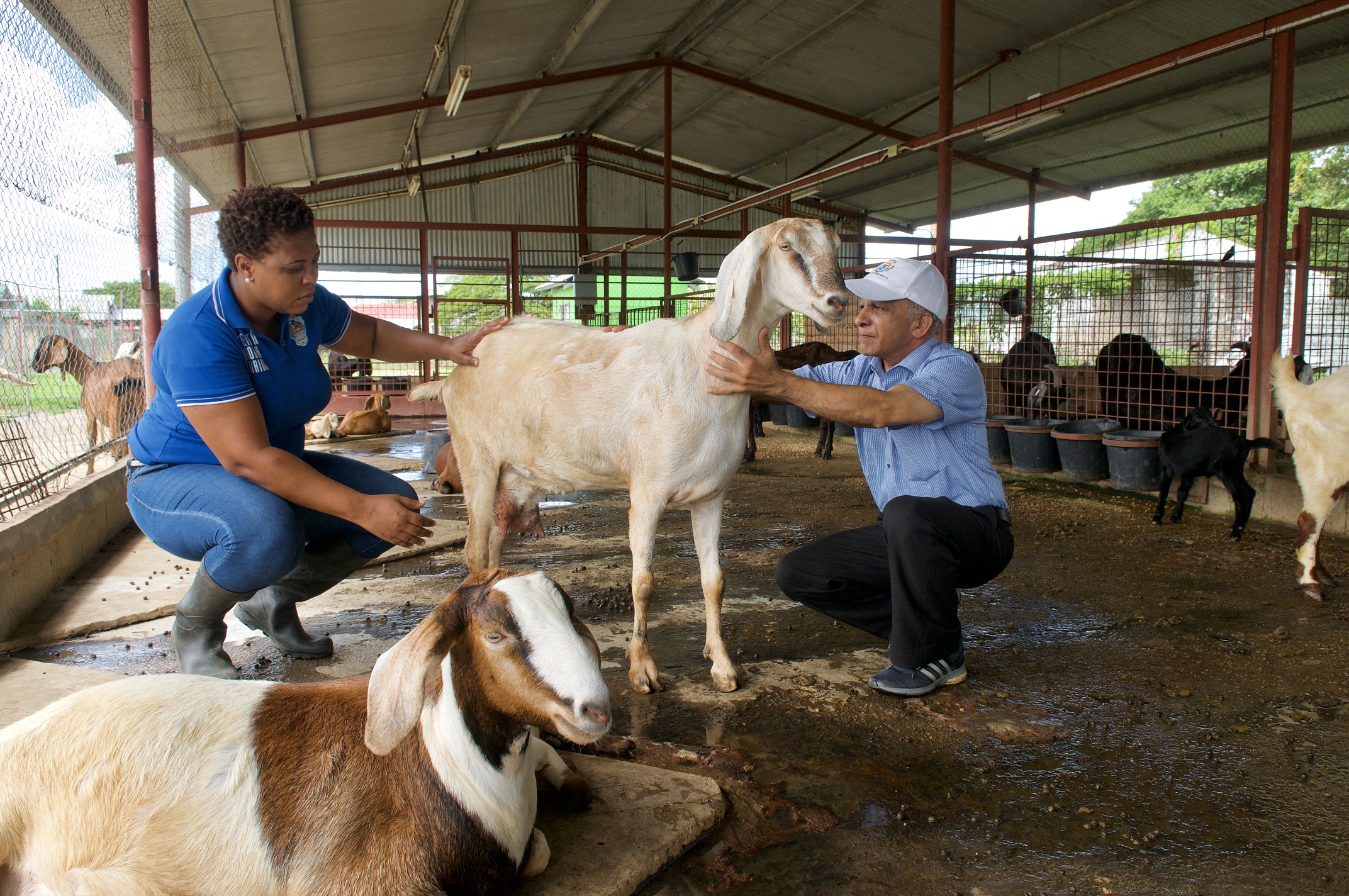
The aim of the MSc in Tropical Animal Science and Production is to deepen graduates’ understanding and awareness of the requirements for livestock production science in developing tropical environments, encompassing both domestic and non-domestic species. The programme is now offered in a blended format, combining online lectures with select face-to-face coursework components. It delivers advanced training in animal production science and animal management with a focus on neo-tropical animal systems and ecosystems. The curriculum includes topics such as Advanced Animal Nutrition, Reproductive Physiology, Advanced Animal Production, Forage Utilization, Livestock Development, and Wildlife (Neo-tropical) Production, Utilization, Management, and Conservation.
Programme Breakdown
This programme comprises taught courses and a compulsory research project as follows:
CORE COURSES
SEMESTER 1
AGLS 6001 Tropical Animal Science
AGLS 6002 Advanced Tropical Forage Utilization
AGLS 6005 Advanced Non-Ruminant Production
SEMESTER 2
AGLS 6003 Tropical Livestock Development
AGLS 6004 Advanced Ruminant Production
YEAR LONG
AGLS 6006 Research Project (compulsory)
ELECTIVE COURSES
Students are required to select TWO course from the following list of electives.
AGLS 6502 Tropical Zoo and Wildlife Production and Management
AGLS 6202 Advanced Animal Nutrition II
AGLS 6401 Reproductive Physiology
AGLS 6804 Tropical Commodity Utilization (Livestock)
Entry Requirements
Candidates applying for admission to the MSc in Tropical Animal Science and Production are required to satisfy the University’s Regulations governing entry to Postgraduate degrees, and should normally hold a Bachelor’s degree of at least lower second class honours in Agriculture or the Biological Sciences (or equivalent qualifications and working experience).
Candidates who lack sufficient undergraduate training in Livestock Science, may be required to make up the deficiencies by taking relevant courses from among the undergraduate offerings from the Department of Food Production.