
Funded by the Global Environment Facility (GEF) with US$3.5 million over five years, the project is implemented by the Food and Agriculture Organization of the United Nations (FAO) and executed by UWI, with the Ministry of Planning, Economic Affairs and Development serving as the national coordinating entity. The project seeks to promote nature-positive development and strengthen food security through sustainable land management and ecosystem restoration.
Two inception workshops, held in Trinidad (25 February 2026) and Tobago (26 February 2026), brought together government agencies, academia, international partners, civil society and the private sector to align strategies for project implementation under the global Blue and Green Islands Integrated Programme.
As Executing Agency, The University of the West Indies, St. Augustine Campus will coordinate project implementation, technical oversight, stakeholder engagement and knowledge management. Through its Faculty of Food and Agriculture, the University will support evidence-based decision-making, innovation and capacity development across sectors.
The project aims to deliver integrated solutions to environmental challenges by:
- Establishing a National Natural Capital Accounting system
- Restoring degraded agricultural lands through nature-based solutions
- Improving soil health and productivity
- Supporting nature-positive private sector initiatives
- Strengthening capacity development and monitoring systems
These actions are expected to enhance resilience to climate change while supporting sustainable livelihoods. Land degradation and soil loss pose significant risks to food security and economic stability in Small Island Developing States. The Bio Resilience project responds directly to these challenges by increasing natural capital and promoting sustainable land-use practices.
Key interventions include the implementation of the Recarbonization of Agricultural Soils (RECSOIL) initiative, demonstration of sustainable farming techniques, and development of policies and financial instruments that encourage environmentally responsible investment. The project forms part of the GEF’s Blue & Green Islands Integrated Programme, which supports island nations in pursuing nature-positive development pathways. Collaboration among national institutions, international organizations, and local communities will be central to achieving long-term outcomes.
Stakeholders emphasized that success will depend on coordinated action across sectors, robust data systems and strong community engagement. The inception workshops marked the formal launch of implementation activities and established a platform for continued collaboration among partners. Over the next five years, the Bio Resilience project is expected to generate significant environmental, economic and social benefits for Trinidad and Tobago.
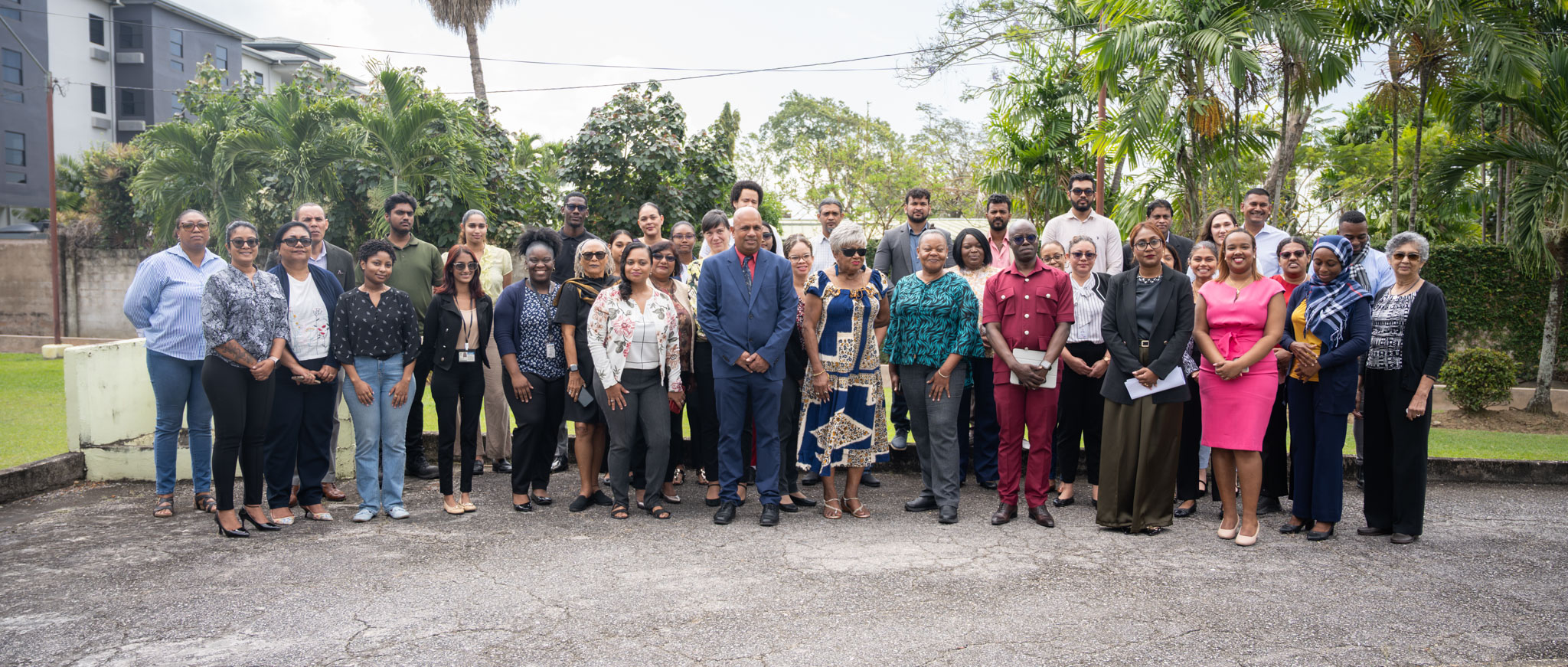
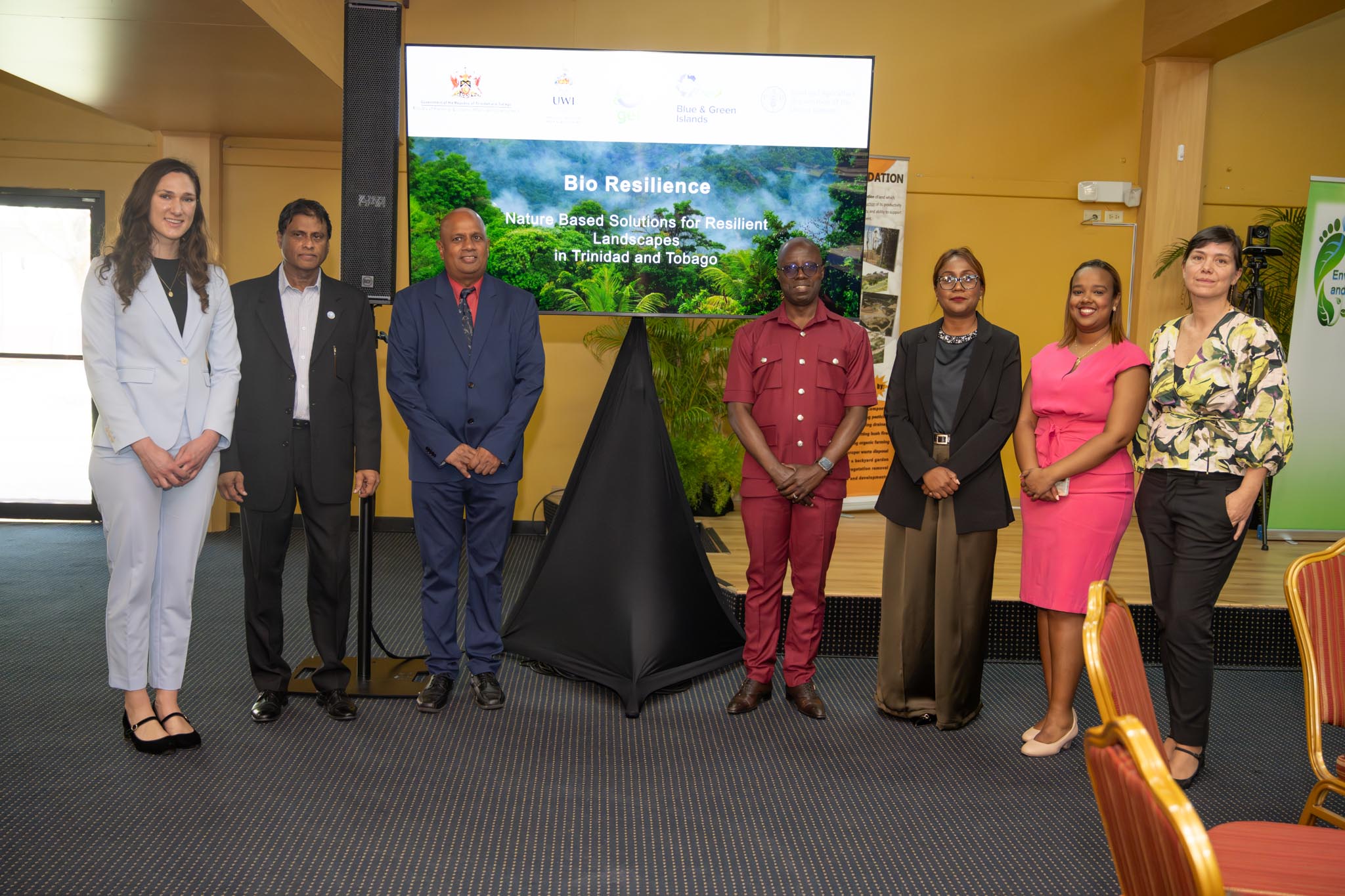
Soil health and climate change specialist at the Global Soil Partnership, Ms. Michela Brown Project, Multi-Programme Coordinator, Representing Trinidad and Tobago and Suriname for the Food and Agriculture Organization of the United Nations, Mr. Suresh Sookbir Technical Director in the Ministry of Planning, Economic Affairs and Development, Dr. David Persaud, ,
Dean of the Faculty of Food and Agriculture of the University of the West Indies, Professor Mark Wuddiver. National Technical Project Coordinator of the Bio Resilience Project, Mrs. Rayanna Pulchan, Administrative Assistant of the Bio Resilience Project, Ms. Christiana Chamaroo, Soil Health and Sustainable Management Specialist at the Food and Agriculture Organization of the United Nations (FAO), Subregional Office for the Caribbean Dr. Maria Cruz Ferro Vazquez.