
Ubiquitous wireless
Since Alexander Graham Bell made the first telephone call in 1876, voice, video and data communications over the Internet have become commonplace. Such communication between people and things, is increasingly facilitated wirelessly over radio frequency (RF) connections.
Wireless market opportunities
The demand for wireless Internet-connected devices (whether for long range communications such as LTE and 5G; or short-range for example Wi-Fi and Bluetooth), has been met by device manufacturers using single chip RF transceivers, integrated circuits that convert digital data to protocol compliant RF signals. The easy access to, and affordability of, these transceivers and other components, has virtually democratized the development of electronic products.
The opportunities for wireless product innovation are significant to microenterprises that do not have the deep pockets of traditional commercial manufacturers, particularly so in small island developing states which do not enjoy the economies of scale of massive local markets. At the same time, innovation is widely understood to be key to both social and economic development; and is a high priority for governments around the world, including here at home.
Breaking barriers – SandBox
Wireless product innovation requires the transmission of RF radiation in the early stages of development and testing. However national regulations only allow RF transmission from equipment that has been certified to provide the assurance of no harm to human health, and no harmful interference to other legitimate RF users. Certification presents a barrier to wireless prototyping as it is time-consuming and expensive, particularly as there are no local accredited laboratories.
The University of the West Indies (UWI) and the Telecommunications Authority of Trinidad and Tobago (TATT) have signed a Memorandum of Understanding which allows the use of prototype wireless devices for a limited time, under specific conditions. This Sandbox is a contemporary regulatory tool, that relaxes barriers to innovation, while maintaining appropriate oversight for the public good.
In addition to the tremendous opportunities for commercialization of locally-developed products, the Sandbox is an important platform for nation building through initiatives that strengthen our STEM identity, leverage intellectual property (IP) rights of our artistes, increase the benefits of information and communications technology (ICT), and more. UWI’s Department of Electrical and Computer Engineering (DECE) is currently engaged in a number of relevant initiatives.
STEM identity
Research shows that Science, Technology, Engineering and Mathematics (STEM) Identity, that is one’s self-perception of STEM ability and competence, impacts decisions to pursue STEM careers. To meet future national development goals that call for a robust STEM-enabled workforce, it is important to strengthen this identity in our children, regardless of their social and economic circumstances.
Inequitable access to, and low availability of, hands-on STEM learning resources are among the prevailing challenges that motivated the design of an Educational Robotics Kit (ERK) by volunteers and researchers at DECE. Like other ERKs, the kit provides rich opportunities for learners to configure, program and control robots’ mechanical structures, typically via a wireless link; and engage in a plethora of captivating, hands-on and critical thinking activities, individually and in groups. The kit is minimal in nature, utilizing a locally sourced structure and open-source components. It can be built by multiple manufacturers and flexibly maintained by STEM activity organizers.
DECE will use the Sandbox for a number of fit for purpose examinations on the ERK including RF exposures of single and multiple devices to children, and resource efficiency studies.
Leveraging IP
Local music generates significant IP, for which royalties are often uncollected as, among other things, data on frequencies of play is required. A remote system has been designed locally to enable artistes, producers and content owners to collect data on when, where and how often, pieces are played. It can be installed at event venues of any size and location, fixed or mobile. Among other things, the system comprises wireless components including a cellular module. The Sandbox will be used, in partnership with DECE, to test the prototype to ensure compliant operation.
Collaborations
DECE works in many other application spaces that could seed collaboration on Sandbox initiatives. These include the application of ICT to sectors including fisheries and agriculture. The Ministry of Informatics in Indonesia has this month asked to visit DECE for assistance with challenges faced by their small-scale fisherfolk; and several local entities have expressed interest in RF-enabled agricultural devices developed by DECE. Those interested in partnering on sandbox initiatives are invited to contact DECE at Head.DECE@sta.uwi.edu. Those interested in making or deploying prototype RF devices, are invited to contact TATT at crdowens@tatt.org.tt.
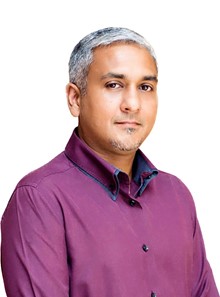
Professor Sanjay Bahadoorsingh
Sanjay Bahadoorsingh holds a BSc in Electrical and Computer Engineering from The UWI, an MSc degree in Power Systems Engineering and Economics from The University of Manchester Institute of Science & Technology (UMIST) and PhD in Electrical and Electronic Engineering from The University of Manchester (UoM). He is a Professor of Power Systems and Sustainable Energy and is the Head of the Department of Electrical and Computer Engineering at The UWI, St Augustine Campus.