
Departments and Officers

The Campus Registrar
The Campus Registrar, Dr Dawn-Marie De Four-Gill, is the Campus’s Chief Administrative Officer with oversight of the following sections:
- Office of the Deputy Campus Registrar
- Graduate Studies and Research
- Student Recruitment, Admissions &Enrolment
- Examinations
- Student Administration Systems
- Secretariat
- Archives and Records Management
- Campus Legal
- Occupational Health, Safety and the Environment
- Division of Facilities Management
- Housing Unit
- Campus Security Services
- Registry IT
- Timetabling Unit
- Digital Transformation Projects
The Campus Bursar
The Campus Bursar, Mr Kevin Kalloo, is in charge of managing the Bursary, which includes leading a team of close to one hundred members of staff, all functioning under the twelve sections of the Bursary. The Bursary is responsible for the efficient management of the financial resources of the Campus.


Artificial Intelligence Innovation Centre
Launched in 2025 at The University of the West Indies, St Augustine, the Artificial Intelligence Innovation Centre (AIIC) is proud to be the largest and most pioneering centre in the region dedicated to advancing Artificial Intelligence (AI). Its mission is to drive research, build capacity, and foster commercialisation, while also shaping policy and governance in the AI landscape. The AIIC collaborates with over 20 partner institutions and boasts a dynamic community of more than 50 members. They also work on over 35 innovative projects that explore a wide range of areas. The efforts are focused on both fundamental AI research and development, pushing the boundaries of AI theory, hardware, and software systems.
Campus Information Technology Services
The St. Augustine Campus Information Technology Services (CITS) is responsible for supporting the Campus community in its implementation and use of Information Technology. CITS currently supports the following software applications: MS Productivity Tools, Moodle, Oracle, Ellucian Banner, and PeopleSoft, in addition to Open Source applications.


Campus Office of Planning and Institutional Research
The Campus Office of Planning and Institutional Research (COPIR) is a unit of the Office of the Campus Principal, serving Campus Senior and Extended Management as well as the broader University community. Its continuing mission is to provide evidence-based information to support the Campus in advancing its strategic goals and enhancing its administrative decision-making ability by providing a platform of comprehensive information and empirical data to inform campus planning, policy formulation and decision-making.
Campus Commercial Business Office
The Campus Commercial Business Office (CCBO) was conceptualised as an office that strategically manages the operations of all the commercial entities operating on the Campus. In the first instance, the established businesses that operate within the ambit of the CCBO are:
- Campus Bookshop
- Central Stores
- Multimedia Production Centre / Printery
- University Inn & Conference Centre
- Vendor Space rental / Concessionaires
It was further envisaged that new UWI businesses, once up and running, will be put under the CCBO so that they can benefit from synergies within the business units, as well as to ensure proper management processes are put in place for the effective management of these businesses.


Campus Projects Offices
The Campus Projects Office (CPO) is responsible for the management and implementation of Capital (Building and Engineering works) Projects on the St Augustine (STA) Campus. The CPO manages projects from the initiation phase through architectural design, planning, tendering, construction and close-out. The CPO, when necessary, also hires design and other consultants to work on Capital Projects and monitor/manage the work of these consultants. The CPO is responsible for the management of the Campus’ Public Sector Investment Programme and reports to Campus Management and the Ministry of Education – Tertiary Education Division on these Projects. The CPO also assists various Departments with various procurement phases and reports to the Campus Procurement Committee and the Campus Finance and General Purposes Committee (F&GPC) as necessary on these activities.
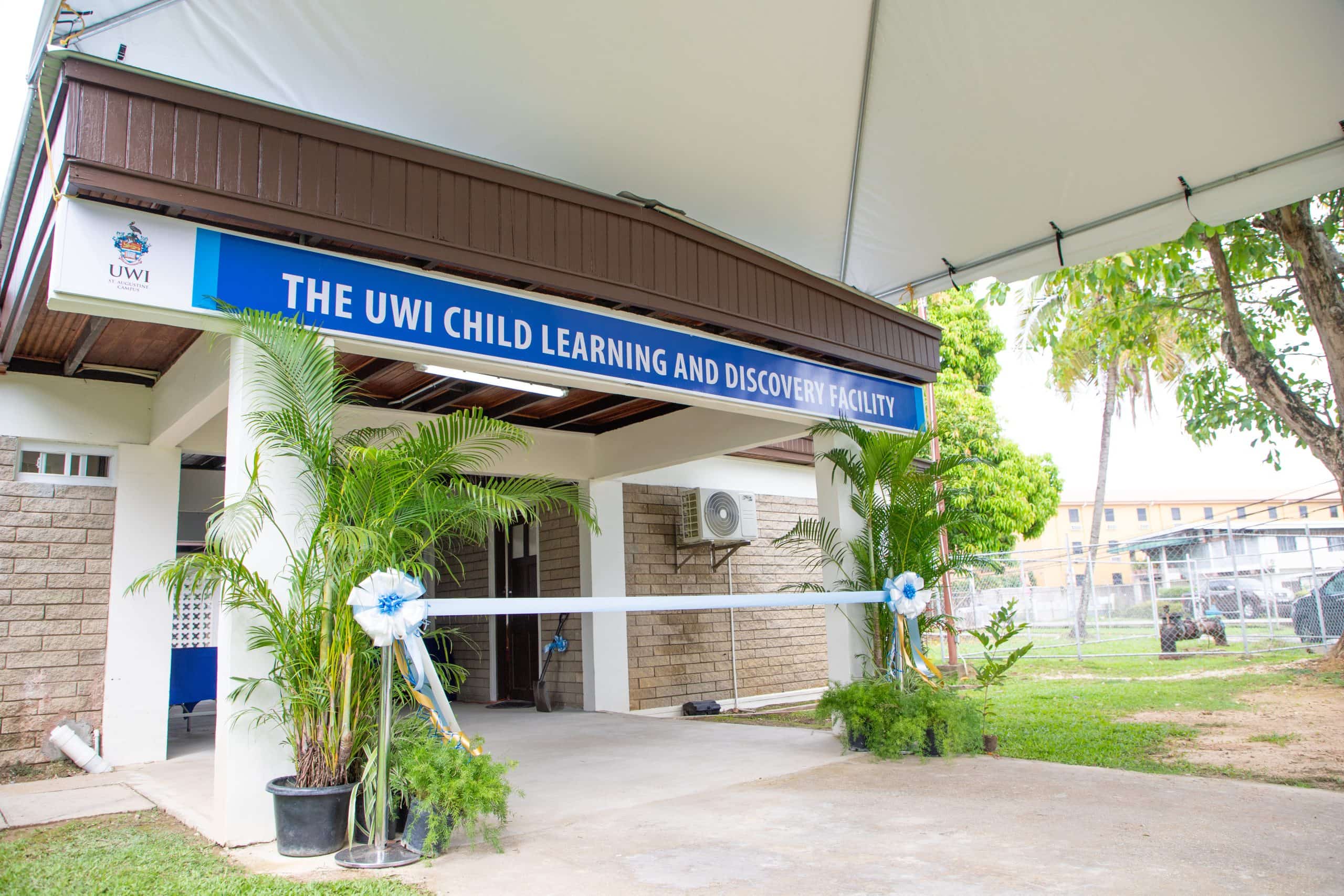
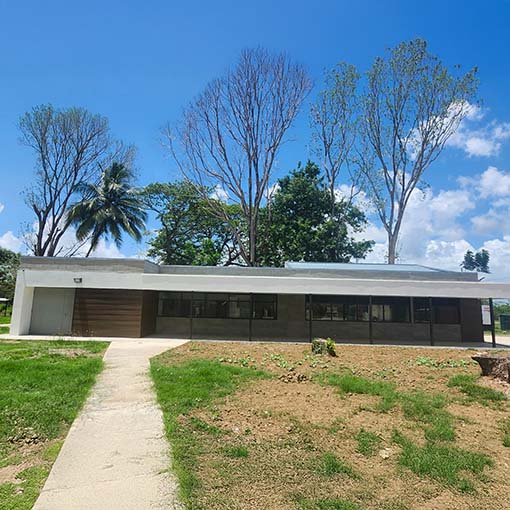
Child Learning and Discovery Facility
The UWI Child Learning and Discovery Facility is a revitalised space dedicated to supporting working parents and nurturing early childhood development. The facility features two key initiatives: an After-School Care Programme for staff and, soon, The UWI St Augustine Preschool. Designed with the needs of the Campus community in mind, the newly renovated space offers a safe, affordable, and high-quality environment for the children of campus employees. The trained professionals are committed to providing engaging and enriching experiences for young learners.
Cocoa Research Centre
As a global leader in the conservation and characterisation of cocoa germplasm, the Cocoa Research Centre (CRC) collaborates with international researchers in pathology, molecular diagnostics and morphological characterisation. Other areas include factors influencing chemical and sensory quality attributes, optimisation of micro-fermentations, development of cocoa quality standards, DNA fingerprinting and genetic diversity, cadmium mitigation, and improving the efficiency of propagation. CRC also supports business entrepreneurs through training programmes, such as the ever popular chocolate making course.
Additionally, it proudly produces dark chocolate bars for sale, made exclusively from our cocoa collection of over 2000 varieties. The CRC is proud to be custodian of the largest public collection of cocoa types in the world.
In 2023, as part of a commercialisation thrust, the Campus sought six million dollars to construct a new chocolate factory, which was completed in 2024 and outfitted in 2025. Located alongside the International Fine Cocoa Innovation Centre, the factory is at the forefront of chocolate innovation. The unique features of the products give the SPIRIT brand a competitive edge, enabling the Campus to enter high-value niche markets and deliver exceptional quality and taste to customers.
Human Resources Division
The Human Resources Division has the mission to recruit, retain, and develop a cadre of highly motivated employees whose competencies fit the requirements of the job and who can effectively contribute to the accomplishment of the strategic objectives of The University of the West Indies. In this regard, they engage in training and upskilling staff members as well as performance management.


Marketing & Communications Office
The Marketing & Communications Office at The UWI St. Augustine is a multi-faceted department driving the university’s strategic visibility and engagement. The Brand & Student Recruitment Marketing team expertly positions The UWI as the top choice for tertiary education through cohesive branding and targeted outreach. Additionally, the Communications and Media Management team amplifies The UWI’s voice with robust media relations and strategic storytelling, whereas the Publications team ensures seamless access to information across all platforms. Furthermore, the Events and Projects team orchestrates impactful events that enhance community engagement and public participation. Together, these units utilise comprehensive strategies in branding, marketing, digital communications, event management, media relations, stakeholder engagement, advertising, and crisis management to uphold and enhance The UWI St. Augustine’s esteemed reputation.
Office of Institutional Advancement & Internationalisation
The Office of Institutional Advancement and Internationalisation (OIAI) is dedicated to building strong partnerships with top-tier institutions across the Caribbean and around the globe and in so doing, aims to The UWI (St Augustine) as a leading global university, centred in the Caribbean. Operationally, the OIAI facilitates international exchanges, mobilities, study tours and Erasmus opportunities that benefit its students, staff and key external partners in the wider Caribbean and global community. As part of its other key mandates, the OIAI is also tasked with strengthening alumni engagement and fostering stakeholder support for its portfolio of Alumni Giving projects.


Office of Procurement
The Procurement Unit of the St Augustine Campus is dedicated to overseeing and managing the Campus’s procurement processes. Its goal is to support all internal stakeholders in the planning and execution of purchasing goods, services, and works necessary for the smooth operation of the institution. They are there to ensure that all procurement activities align with the Campus’s mission and contribute to the continued success of the campus community.
St Augustine Centre for Innovation & Entrepreneurship
The St Augustine Centre for Innovation & Entrepreneurship’s (StACIE’s) mission is to drive innovation and entrepreneurship within the University and beyond.
It connects academia to industry, policy- and decision-makers, bringing great ideas to life for the use and benefit of society. By funding, protecting and commercialising new innovations, we generate solutions that shape the future of the region. Additionally, it coordinates the Campus’s grant-funding function, facilitating researchers on the Camous and donor-grants for research purposes.

The Alma Jordan Library
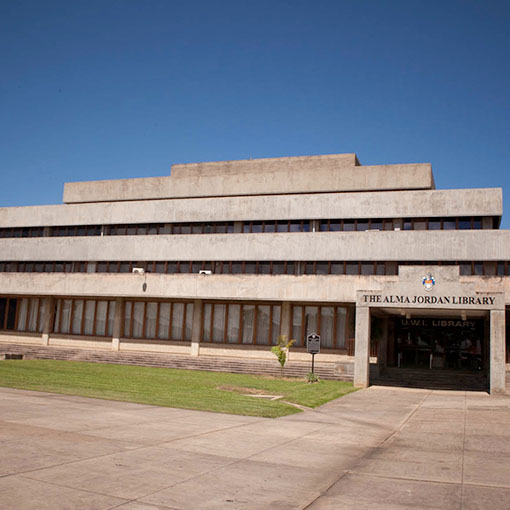
The Alma Jordan Library (previously known as the Main Library), which officially opened at its present location in January 1970, covers a total area of 9,000 square metres. It is organised into four subject divisions: Engineering, Food and Agriculture/Science and Technology, Humanities, and Social Sciences.
The Alma Jordan Library has a wide collection of electronic resources, including 252 databases, with access to 106,160 electronic journal titles and 66,498 electronic books. In addition, it holds over 437,513 monographs, which increase by approximately 1000 titles annually. These holdings also include a serials collection of 57,386 bound volumes and 295 print journal titles. The Library also has 4157 audio-visual items, 1,446 cartographic items, 6,011 photographs, 4,206 multimedia and 22,784 microfilms.