
Triple A Strategy: Strategic Plan 2022-2027
The University of the West Indies (The UWI), like most tertiary institutions, is guided by a strategic plan or roadmap to achieve its goals, enhance the overall educational experience, and ensure the institution effectively responds to the evolving needs of students and the wider community. This roadmap for the period 2022 to 2027 is the Triple A Strategic Plan—focusing on Access, Alignment, and Agility. Launched in 2016, this plan aims to elevate The UWI to a globally recognised institution known for academic excellence and financial sustainability.
This vision extends over a decade with two phases. Phase I (2017–2022) concentrated on harnessing our internal strengths to enhance The UWI’s global reputation and support development in the Caribbean. Now, Phase II (2022-2027) shifts the focus to ensure financial sustainability by implementing targeted revenue-generating initiatives and strengthening the institutional framework. As in Phase I, these efforts will continue to be planned, executed and assessed according to the pillars of Access, Alignment and Agility.
The Strategic Initiatives of the St Augustine Campus
As part of the second phase, the St Augustine Campus adopted a proactive stance by launching a series of comprehensive projects that align with the strategic goals of the Triple A framework. These initiatives are thoughtfully crafted and rooted in the institutional mission to enhance commercialisation, operational efficiency, and agility across both academic and administrative functions. The primary aim is to optimise resources, create a lasting impact, and ensure that The UWI remains committed to its academic mission while building resilience and readiness for the future.
A Framework for Operationalisation of Commercial Initiatives
 To foster effective governance and strategic alignment in commercial initiatives, the Campus, led by the Campus Principal, introduced a framework designed to stimulate and nurture innovation and entrepreneurship. This framework aims to generate revenue and enhance sustainability.
A key component of this revenue-generating strategy is the Campus Implementation Committee (CIC). Modelled after a ‘Shark Tank’, the CIC offers oversight, in-depth review, and strategic decision-making for new projects. When necessary, the Campus or individual faculties provide startup capital for selected entrepreneurial ventures in the form of loan financing. The CIC ensures that all initiatives align with The UWI Triple A Strategic Plan and its performance expectations. Some of the projects that have received funding from this model are the HumanKind Studios from the Faculty of Humanities and Education and The UWI Optical Centre. The CIC has also approved funding for the University Field Station.
The HumanKind Studios
 HumanKind Studios is the Faculty of Humanities and Education’s commercial arm, dedicated to delivering top-notch services that are high in quality and in demand. The services include live streaming, promotional storytelling, documentaries, and expert videography and cinematography.
Click here to learn more about the HumanKind Studios
The Optical Centre
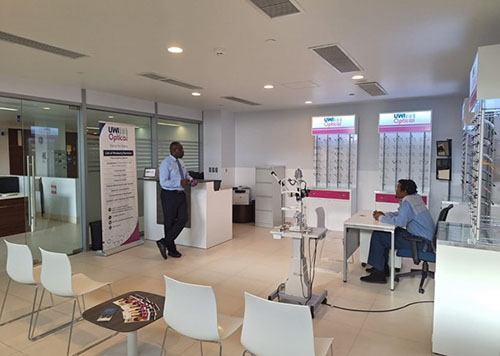 The UWI Optical Centre harnesses the skills and expertise of the Optometry programme from the Faculty of Medical Sciences. The Centre opened in 2025, providing optical services and hands-on learning for students at the School of Optometry, bridging education and service delivery.
The UWI Optical Centre is a commercial initiative under the Faculty of Medical Sciences. The Optical Centre serves as a commercial entity, providing eye exam services as well as corrective lenses, at the mid to affordable range, targeting low-income earners and underserved rural sectors of the national population. It also enables practical application and business learning for UWI optometry students.
The Centre will offer the full range of progressive lenses, given the client demand. It remains committed to student training and outreach /services for the underserved.
The UWI Innovation Farm, formerly the University Field Station
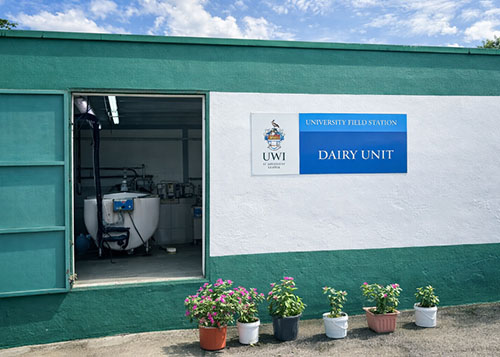 The University of the West Indies Field Station (UFS) was established in 1947 with land resources and multiple units to support teaching, research, and outreach in Livestock production (ruminant and non-ruminant), crop production, cocoa research, tree crop and horticulture production and management. The primary objective of the University Innovation Farm, through the Faculty of Agricultural Sciences and Sustainability (formerly, the Faculty of Food and Agriculture), is to teach, facilitate research and train the farming community in sustainable agri-environmental practices, product innovation and entrepreneurship. Emerging from the FASS, The Dairy Unit, as part of the existing field station, is seeking to commercialise dairy operations at the University Field Station to enhance agricultural training, research and production.
Spin-Off Companies
The Campus has established two spin-off companies to enhance its entrepreneurship and commercialisation efforts: UWI Seal-It Ltd and UWI Fine Cocoa Products Ltd. These companies play a crucial role in developing and marketing innovative products derived from cutting-edge research, ensuring that they are viable for the marketplace. Each company is governed by a Board of Directors, with the Campus Principal serving as the Chair. As with other companies, these follow structured protocols that include a Corporate Secretary, strategic planning, implementation, execution, and ongoing monitoring and reporting.
Alignment with Strategic Plan: Triple A Strategy
In addition to the commercial efforts approved by the CIC, the Campus has had three strategic initiatives:
- The creation of a Global School of Medicine,
- The Cocoa Research Centre’s chocolate factory project, and
- Alumni fundraising.
The Global School of Medicine
The University of the West Indies St Augustine Campus (The UWI STA) has a long history of offering medical programmes. The medical school was the first to be introduced in The University College of the West Indies (UCWI) in 1948, before the UCWI became The UWI STA. Since then, the Faculty of Medical Sciences has offered high-quality, robust degree programmes in the field of medicine.
To continue with this tradition of offering high-quality programmes and expand our reach, The Campus has been working toward the establishment of a new medical school, The UWI STA Global School of Medicine (GSM). The FMS will, therefore, grant two separate medical degrees: a graduate-level MD degree, along with the traditional undergraduate MBBS degree currently offered.
Building on the university’s longstanding tradition of excellence and its robust Faculty of Medical Science, there is a strong foundation for this global initiative. In line with The UWI’s Triple A Strategy, the new medical school will serve to increase global Access to first-class graduate medical education, re-engineer the medical education curriculum to improve Alignment with future healthcare needs and demonstrate the university’s Agility in maximising the use of assets at its disposal and marshalling resources to explore new opportunities to secure its financial sustainability.
The UWI-GSM Vision
The vision for the UWI-GSM is to develop a new sustainable business model for the delivery of medical education, with a focus on attracting foreign students and preparing them for the global market.
The UWI-GSM Mission
To be a globally competitive innovator in the provision of medical education and training, preparing practitioners to be effective in delivering culturally competent, team-based, cost-effective, patient-centred, value-based care while embracing the use of technology to address 21st-century global health challenges.
For further details on the GSM, visit: https://sta.uwi.edu/uwigsm/
The Cocoa Research Centre’s Chocolate Factory project
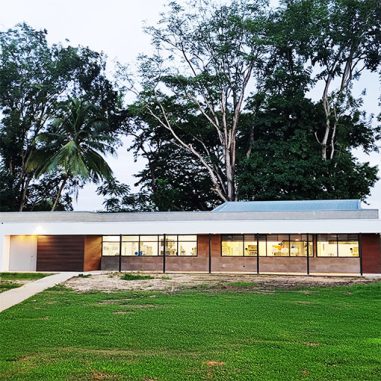 The Cocoa Research Centre (CRC) is proud to be recognised as the world’s oldest research centre in cocoa. With a remarkable legacy spanning 94 years, the CRC remains at the forefront of cocoa research, influencing the industry both regionally and internationally
The CRC’s journey began in 1930 when initially established as the Cocoa Research Scheme at the Imperial College of Tropical Agriculture. Following Trinidad and Tobago’s independence in 1962, it evolved into the Cocoa Research Unit under The University of the West Indies. Fast-forward to 2012, and it became the Cocoa Research Centre, guided by the dynamic leadership of Professor Pathmanathan Umaharan.
The custodian of the International Cocoa Genebank, the largest cocoa collection globally, the CRC boasts over 2300 varieties of cocoa preserved in a 100-acre estate. Established through the collaboration of historical collections from the Amazon region with support from the EU, this amazing collection is commonly thought of as the ‘Noah’s Ark of Cocoa’. The CRC’s mission goes beyond preservation—actively contributing to breeding programmes around the globe through specialised germplasm services and an innovative global DNA fingerprinting service. The CRC also supports a pioneering molecular breeding programme, taking cocoa cultivation to new heights.
The CRC stands out as a vital resource not just for local and regional inquiries but as a global nexus driving innovation in the cocoa and chocolate industries. They have collaborated with industry giants, including Mondelez, Mars-Wrigley, Cargill, Barry Callebaut and the European Cocoa Industry associates, ECA-CAOBISCO-FCC. The CRC’s reach extends far beyond our borders, with partnerships established alongside institutions, such as USDA-ARS, George Washington University, Penn State University, and the University of Arizona in the United States. In the United Kingdom, they have partnered with the University of Reading and the University of Nottingham while developing connections in France with CIRAD and the University of Grenoble Antilles. Further, the CRC has deepened ties with the University of Hamburg, Germany. Through these collaborations, the CRC has successfully created a dynamic global hub for cocoa research, committed to advancing the future of cocoa and chocolate.
The International Fine Cocoa Innovation Centre
Introducing the International Fine Cocoa Innovation Centre! Established between 2014 and 2018 with generous support from the European Union, the Centre operates under a triple helix model designed to foster development in the cocoa industry.
The Centre houses a model cocoa estate, developed with support from the SWISS Chocolate Company, Lindt Sprunglii, along with a modern postharvest processing facility, a pilot chocolate factory and business and technology incubators. The Centre’s commitment to research and learning does not stop there; having nurtured talent and entrepreneurship, training over 300 chocolatiers and helping to establish more than 80 value-added small and medium-sized enterprises.
As its name suggests, innovation lies at the heart of the Centre. It not only develops and markets exciting new products, but it is also rolling out a 12-module bean-to-bar train-the-trainer programme designed to spark creativity in the local cocoa industry. Together with partners such as IDB-LAB and George Washington University, the Centre is building investment portfolios and creating a destination for impact investors who want to make a difference. The Centre is also collaborating with local businesses to create a fund to transform small farms into productive units.
The Chocolate Factory
The Innovation Centre proudly presents the first commercial venture at The Univesity of the West Indies – A Commercial Chocolate Factory. This cutting-edge facility is equipped with advanced, high-quality equipment and a top-notch quality management system developed by the CRC. This means that the factory is not just making chocolate but transforming the cocoa industry by enhancing efficiency, lowering costs and delivering quality-certified intermediary products to local chocolatiers.
The Chocolate Factory is also creating its own range of delicious, branded chocolate and other delectable products, showcasing the rich depth of flavours of our local cocoa. Collaborate today with the CRC and the Innovation Centre as it continues to elevate the value of our cocoa exports.
Why the Chocolate Factory?
- Given its size (200 metric tonnes in one shift), the Factory produces chocolates at a volume that is large enough for brand development and positioning globally
- Given the co-location with the International Fine Cocoa Innovation Centre, the innovations built into the product provides the SPIRIT brand of chocolates a comparative advantage (allowing penetration into high value niche markets)
- The factory given its design is the first food safe facility in Trinidad and Tobago capable of producing a product that can fulfil all the regulatory requirements of export countries
- Given the co-location with UWI-CRC’s technology and business incubation centre, it can nurture cocoa-based-SME’s and provide them with quality centred feed stock for their production of a variety of downstream products – increasing foreign exchange earnings, diversification of the economy and creating value employment
- Given the capacity to absorb large quantities of cocoa, it will serve as an incentive for upstream investment into cocoa farms
Our Innovation
The chocolate factory will feature some of the innovations developed locally at the Cocoa Research Centre:
- Novel flavours developed leveraging the enormous diversity resident within our cocoa genebank.
- Novel fermentation technologies that improve the diversity of chocolate flavours.
- Zero carbon chocolate based on carbon sequestration farm design and carbon emission reduction technologies.
- A green certification and traceability system to build trust in the market place.
- Mitigation of cadmium and aluminium in chocolates using the home grown evidence-based methodology.
- Novel chocolate, beverage and nutraceutical products to disrupt the market. Given its location within the University Field Station, it will also combine chocolate with milk, yogurt, kefir and other health products.
- Developing a molecular cocoa breeding programme capable of producing varieties for sustainable cocoa farming.
Agrotourism thrust
The chocolate factory is co-located with the model cocoa farm, propagation greenhouses, a postharvest facility and an innovation centre. We are also in the process of establishing a chocolate shop and beverage bar along with merchandising. This allows the chocolate factory to double up as a bean-to-bar agrotourism product. It will showcase to visitors the entire process from innovations in cocoa farming and propagation, innovations in postharvest processing, chocolate innovations (at the innovation centre), business and technology incubators, and the chocolate factory in one site. With the establishment of the chocolate shop and beverage bar the site will become a full-fledged tourism product.
Incubating Cocoa-based Small and Medium Enterprises
The chocolate factory working with other entrepreneurs will provide the feed stock to product a variety of other products thus contributing to SME development, employment and economic diversification.
Nurturing a Cocoa Industry
The 200-metre chocolate factory will serve as a demand-pull entity, incentivising the rehabilitation of existing cocoa farms and investment into new cocoa farms. The Cocoa Research Centre has developed business plans for numerous farms as well as private sector investors and provides technological support to modernise traditional farms into highly productive units.
For more details and to collaborate with the CRC, contact Professor Pathmanathan Umaharam at pathmanathan.umaharan@uwi.edu
 Alumni fundraising
The UWI is the leading institution for higher education in the Caribbean. For more than 75 years, we have played a crucial role in driving development across the region and have been at the heart of initiatives aimed at enhancing the lives of people in the Caribbean. This includes producing a network of more than 237,000 alumni. There is hardly any part of Caribbean society where you will not find UWI graduates, from top government positions to leading roles in business. Many of them have gone on to become Heads of Government or Heads of State, and numerous graduates are at the forefront of various professions both locally and internationally.
Our University and the St Augustine Campus, in particular, have contributed to national and regional development, producing pioneering research with community impacts and offering expertise and services to the public and private sector. In our commitment to fostering sustainability and promoting development, the Campus continues to embark on its pivotal journey with bold strategic goals and objectives. These include:
- Promoting Food Security: We are in the process of upgrading the UWI Field Station to boost sustainable food production, develop climate-resilient crops and expand commercial milk and meat production. By doing this, we are not only contributing to regional food security, but supporting local farmers and communities as well as promoting economic resilience.
- Establishing a Global School of Medicine at our South Campus and Couva Laboratory: The GSM is one of our main strategic projects. Its intention is to increase healthcare capacity, foster international collaboration, and advance global health.
- Advancing Technology Research: Our Campus is prioritising AI, climate-smart technologies, and disaster management, utilising top-notch facilities. The goal is to develop innovative solutions to address regional challenges, improve disaster preparedness, and maintain strong leadership in technological research throughout the Caribbean.
- Championing Environmental Sustainability: At The UWI STA, we are committed to integrating sustainable practices throughout our campus operations. By investing in green infrastructure and nurturing a culture that values environmental responsibility, we aim to set a positive example for the region. Our efforts will help lower the Campus’s carbon footprint, encourage sustainable development, and inspire future leaders to be environmentally conscious.
- Enhancing Student Development: A major focus is on enhancing our student facilities, accommodations and information and communication technology (ICT) systems to create a more enriching learning environment. These improvements will boost student engagement, improve academic performance, and support overall well-being. In turn, this will help prepare graduates to become dynamic leaders and make a positive impact in the world.
- Maintaining and upgrading our aging Facilities and Amenities: Another main goal of ours is to provide appropriate work and study spaces for both students and staff, ensuring we minimise any potential health and safety risks.
- Continuing and strengthening our leadership of pioneering Cultural Initiatives and education: These elements continue to play a crucial role in shaping the cultural richness of our country, from the steelpan and dance to Carnival and tassa education and certification. We have also seen the emergence of new art forms, such as Spoken Word, which bring depth by adding another layer to our dynamic culture.
- Partnering with NGOS: The Campus is committed to continuing and improving our work to create a more equitable society, focusing on supporting underserved communities and migrant groups.
In light of these pressing objectives, we must acknowledge the ongoing and persistent challenge of financial constraints. All universities rely on their cherished alumni to contribute generously toward their sustainability and The UWI is no different. Your financial support has the power to change lives and enable us to keep making a meaningful impact in the country and region. Join us! Let us work together and continue our vital work that makes such a significant difference. Through our Alumni Giving Initiatives, including UWI CONNECT and our user-friendly GIVE NOW platform, contributing has never been easier.
- GIVE NOW: Make secure, transparent donations online.
- UWI CONNECT: Engage with fellow alumni and stay updated on campus developments.
To discuss how you can contribute further, please reach out to Mr Julian Henry, Director, International Office at julian.henry@uwi.edu.