
Across the world, climate change is making life harder for farmers. In Trinidad and Tobago, our farmers are facing warmer temperatures and more variable seasonal patterns in rainfall.
This leads to some difficult decisions: Will the wet season be too wet for lettuce? Will the dry season be too dry for tomatoes?
With weather patterns changing and old certainties becoming new uncertainties, how can growers adapt their practices to protect their investment? Farmers have many tools to protect from drought, such as planting different crops, planting earlier to avoid the worst of the dry season, or irrigating high-value crops. Of course, there will always be trade-offs that come with such tools. For example, planting cassava rather than tomato may avoid losing a crop, but there will still be a loss in profits. As such, even farmers who are able to adapt their practices will need additional support.
In The UWI’s Department of Life Sciences, we have been testing locally grown vegetable varieties to see if they are well suited to warmer, dryer conditions. Typically, we find that most varieties are able to survive temperatures up to 35 oC, although there is little photosynthesis at this heat.
When heat is combined with drought, there is a risk that the whole crop is lost, due to failures in pollination and loss of fruit. Here, adapting planting practices can help mitigate this risk. For example cocoa grown under shade trees has more protection from the warming climate than those grown in monoculture. However, trees can still die in the driest months and cocoa growers will increasingly need a supply of irrigation water to withstand such events.
As the Caribbean gets warmer and rainfall patterns are seen to vary, governments have accepted that we need to prepare for climate change (as well as seeking to reduce its magnitude). Coordination between government and other institutions is needed if we are to take advantage of large-scale options for climate change adaptation, such as crop insurance, tailored climate forecasts, improved water supply and nature-based solutions. Crop insurance for droughts or excess rainfall events acts to spread the risk from an unproductive or unprofitable crop, such a system could be vital in allowing farmers to respond to climate change but requires state support.
If farmers aren’t helped to adapt we will face a lose-lose scenario, with underused agricultural land reducing the uptake of carbon dioxide, while also threatening our food supply. Across the world farmers are abandoning agricultural land due to climate change, e.g. in the Sahel Region of Africa, climate migrants have been forced to exit farming as the weather becomes too harsh or too variable for farming livelihoods to be sustained. Trinidad & Tobago already has a shortfall in local food production, with many younger citizens choosing to seek their fortune away from agriculture. Without support, climate change could become the last straw for our already underutilized farms.
Globally, there is an increasing focus on the role of nature-based solutions in protecting agricultural land from the worst effects of climate change. There are calls for more agroforestry, with crops growing alongside trees, as seen in our very own shade grown cocoa. A well-developed tree canopy has been shown to help buffer the severe effects of drought and heat, making crops more resilient. Similarly, Governments are being encouraged to retain natural ecosystems close to farms to protect soil water, nutrients and biodiversity during climate extremes. Natural ecosystems act as reservoirs of biodiversity, protecting pollinators and insects that control pests, making the farm landscape more resilient to broader climate impacts. Trinidad & Tobago is ahead of the pack in this regard with a large portion of the country still having some forest cover.
Tobago sees some of the worst droughts, but think how much dryer it would be if the Main Ridge Forest Reserve was not there to capture and store the moisture from the passing clouds?
The UWI is working with the Government of the Republic of Trinidad and Tobago, the Food and Agriculture Organization and others to ensure the Protected Areas network is maintained in the face of climate change, so that people, biodiversity and our agricultural sector can continue to benefit from its protecting influence.
This natural capital, combined with targeted crop research and improved coordination between government and other stakeholders in assisting farmers to adapt, offers hope that the sector can be resilient in a rapidly changing world.
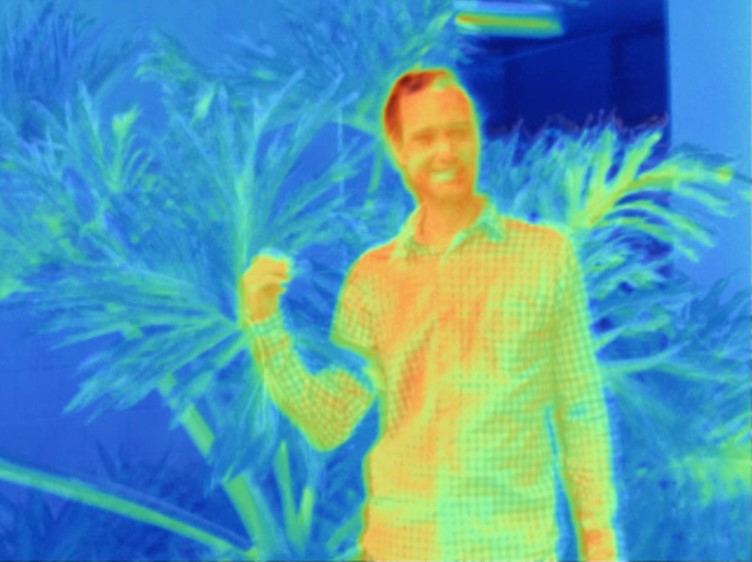
Thermal Imaging shows how plants keep their leaves cool (clue colours) by transpiring water and provide shade for the surrounding environment.
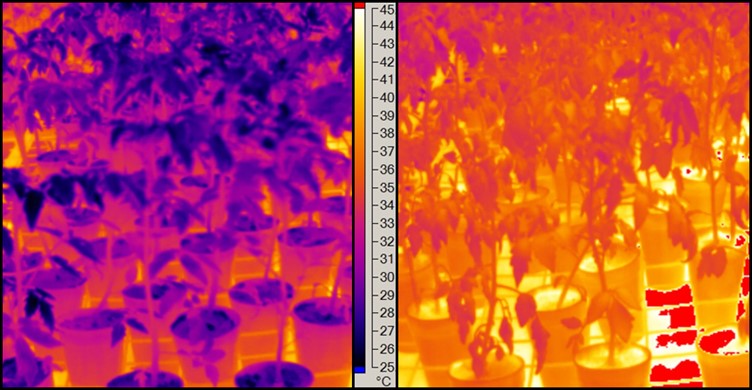
Thermal Imaging shows how droughted tomato plants (right) can soon overheat, while irrigated plants (left) keep their leaves cool by transpiring water.
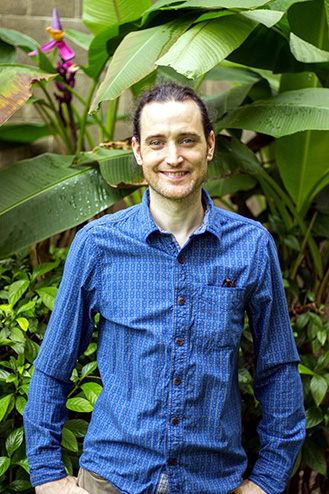
Dr Aidan Farrell
Dr Aidan Farrell is a Senior Lecturer in Plant Physiology, Department of Life Sciences at the St Augustine Campus. His research examines the mechanisms used by plants to grow and survive in a changing environment, and applies this understanding to help improve the sustainability and resilience of natural and agricultural systems.