
Polycystic Ovary Syndrome (PCOS), a widespread yet frequently undiagnosed condition affecting 8–13% of women globally, poses a substantial health challenge. With its profound impact spanning from adolescence to post-menopause, the World Health Organization (WHO) reports a staggering 70% of affected women worldwide remain undiagnosed. In the pursuit of strategies to address this pervasive health issue, I participated in a study by a dynamic team of researchers at The University of the West Indies, St Augustine, that included Professor Venkatesan Sundaram and Professor Brian Cockburn, in partnership with Professor Ricardo Azziz, a leading global PCOS researcher and CEO of the American Society for Reproductive Medicine at the University of Alabama. The collaboration also included Ms Sasha Ottey, Founder and Executive Director of PCOS Challenge Incorporated, USA. The study aimed to assess the prevalence of PCOS in Trinidad and significantly advance our understanding and awareness of this intricate syndrome.
Initially described in 1935 by Stein and Leventhal, PCOS presents a complex clinical picture, necessitating refined diagnostic criteria. The standard diagnosis for the syndrome has been modified and improved through highly detailed discussions and agreements during meetings of the international scientific community. These include the National Institutes of Health PCOS conference in 1990 and the European Society of Human Reproduction and Embryology/American Society for Reproductive Medicine (ESHER/ASRM) sponsored meetings of the PCOS consensus workshop group in Rotterdam in 2003, 2004 and 2018. The International Evidence-based Guideline for the Assessment and Management of Polycystic Ovary Syndrome was also recently updated in 2023 based on current knowledge of this syndrome.
Given the multifaceted nature of PCOS, a comprehensive assessment covers irregular menstrual cycles, ovulatory dysfunction, clinically assessed hyperandrogenism, polycystic ovarian morphology, and anti-Mullerian hormone. Consideration must also be given to ethnic variation, menopause life stage, cardiovascular risks, impaired glucose tolerance and type two diabetes (T2D) risk, glucose testing, obstructive sleep apnoea, endometrial hyperplasia and cancer, and risk in first-degree relatives.
Prevalence, screening and management of psychological features and models of care include a patient’s quality of life, depression and anxiety, psychosexual function and body image, in addition to eating disorders, information resources, models of care, cultural and linguistic considerations, psychological therapy, antidepressant and anxiolytic treatment. Lifestyle management includes effective lifestyle interventions, behavioural strategies, dietary intervention, exercise intervention, factors affecting weight gain and weight stigma. Polycystic ovary syndrome is also the leading cause of infertility worldwide, and the management of non-fertility features includes pharmacology treatment principles in PCOS, which varies from patient to patient.
Recognising the scarcity of epidemiological studies on PCOS in the Caribbean, the team embarked on a groundbreaking research project over the past year. Fuelled by funding from the UWI School of Graduate Studies and Research and supported by donors Ramps Logistics, Caribbean Eye Institute, Rotary Club of St Augustine, Rotary Club of Felicity/ Charlieville and Rotary Club of Central Port of Spain, the community-based project enrolled 230 females aged 18–45 across diverse geographical locations in Trinidad. Preliminary results revealed a 7% prevalence of PCOS, shedding light on the condition’s impact on the local population. Notable, associations between Body Mass Index (BMI), Acanthosis nigricans (AN), and infertility emerged, adding depth to our understanding of the local PCOS phenotype.
The team participated in a regional online webinar in July 2023, engaging representatives from 24 countries. The event was educational and garnered wide news coverage, amplifying the reach of PCOS awareness. Closer to home, a local webinar in September 2023 engaged 100 secondary school students, addressing not only PCOS but mental health, the association of PCOS with T2D, and the significance of PCOS research in Trinidad. The findings were also presented at the Androgen Excess and PCOS Society in Rotterdam and took centre stage at The UWI’s Research Festival. The team is now collaborating with the Rotary Club of St Augustine to develop and initiate a legislative policy for PCOS awareness and education in Regional Health Authorities throughout Trinidad and Tobago.
The past year has been transformative for PCOS research in Trinidad. From defining prevalence to engaging communities and garnering international recognition, the team’s efforts highlight the power of collaborative research in addressing a condition that has long lingered in the shadows.
I am grateful to sponsors and collaborators for joining the effort to create awareness locally and regionally. Our country is now part of the global effort of a pool of dedicated researchers aiming to help women with this condition, underscoring the profound purpose of initiating PCOS research, education, and awareness in Trinidad.

Dr Stephanie Mohammed
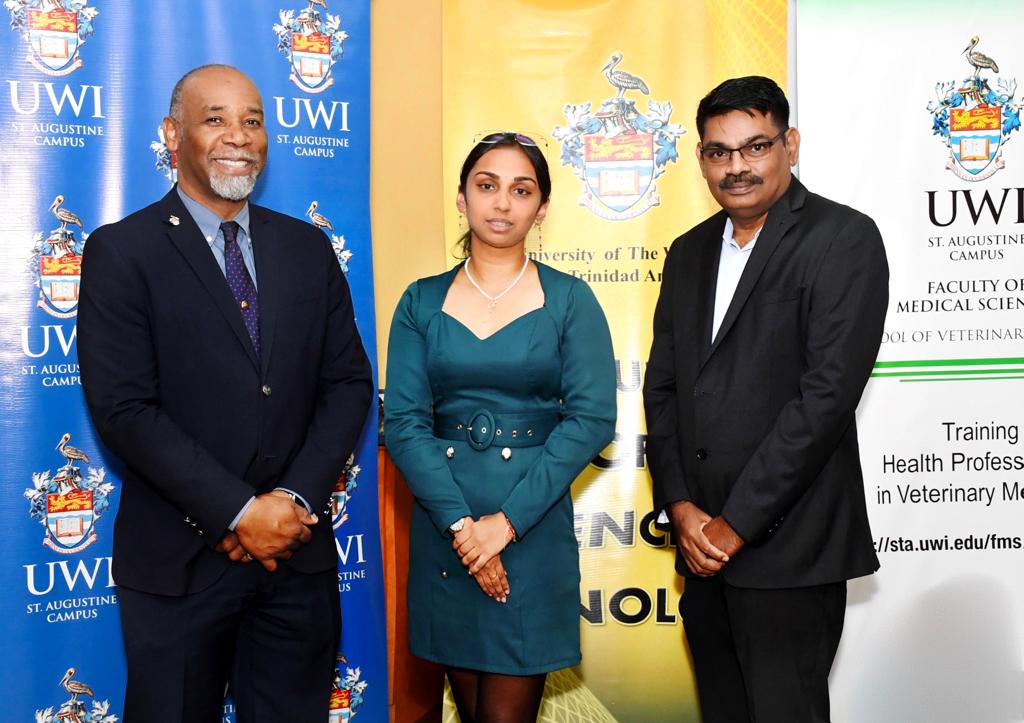
Professor Brian Cockburn (L), Dr Stephanie Mohammed (C) and Professor Venkatesen Sundaram (R)
Dr Stephanie Mohammed is currently a Postdoctoral Researcher at the University of Pennsylvania Perelman School of Medicine. In 2023, she earned the PCOS Early-Stage Investigator Award and the Ricardo Azziz Advocacy Leadership Award.