
Trinidad and Tobago is a biologist’s paradise.
The sheer number of species we share these islands with is mind-blowing, and the list is growing each year as we find new species on our doorstep. Only last year a new species of Trinbagonian bat was recorded, bringing the known total to 70. The number of butterflies and moths in T&T stands at well over 3,000 with several new records added each year.
While these numbers sound impressive, they are almost certainly underestimates of the actual number of species within these groups. This is partly because T&T, and the neotropics more broadly, have been historically neglected relative to North America and Europe in terms of documentation of biodiversity.
This is an increasingly concerning disparity, as it leaves us less well able to conserve this precious natural capital from the unprecedented threats we are currently facing. Climate Change, invasive species, habitat destruction and pollution are all major contributors to what has been rightly termed a global “biodiversity crisis”. However, put simply: if we don’t know what we have, how can we know how to protect it?
The solution? Narrow the information gap! There are many ways in which we can generate more biodiversity data: through scientific surveys, public events like the annual Bioblitz, and by encouraging the public to use apps like “iNaturalist” to upload their wildlife observations.
However, there are also hidden sources of existing information right under our noses: natural history collections.
In T&T we have a number of valuable collections, the two largest are housed at The UWI St Augustine Campus: The UWI Zoology Museum contains more than 50,000 animal specimens, from monkeys to millipedes, and the National Herbarium includes thousands of botanical specimens. There are also small yet significant collections elsewhere – such as the National Museum and Art Gallery’s collection of natural history objects. Each of these three collections includes specimens dating back more than a century, as well as important contemporary additions, offering unique insights into the presence and distribution of plants and animals in T&T and the Caribbean region over space and time. These ‘Aladdin’s caves’ of fascinating specimens have been enjoyed by school children, undergraduates and researchers over many decades, yet they have remained relatively inaccessible to anyone outside of T&T, or indeed to local conservationists and policy-makers who may be unaware of their existence.
To address this, in 2021 The UWI was awarded a “Biodiversity Information for Development” grant, specifically designed to make T&T’s biodiversity data more available to all. This allowed the Department of Life Sciences to undertake a 2-year project to digitise and publish the three nationally important collections mentioned above onto an online database known as GBIF – the Global Biodiversity Information Facility. This international database is funded by a collaboration of governments and is completely free to use – in fact, anyone can search, view and download more than 2 billion records from museums and other collections and surveys all over the world.
In total we have now added more than 50,000 specimens to GBIF, placing T&T and our nation’s natural history collections on the global stage, and ensuring the data within them is available to be used and cited by all.
As part of the project, we also trained stakeholders from more than 30 different organisations in T&T in how to access and use these data, as well as how to prepare their own datasets for submission. This means that not only will T&T’s biodiversity data be put to better use, for example, to help inform conservation policy or guide the boundaries of protected areas, but our representation on GBIF will continue to grow well beyond the end of the project.
In parallel with our efforts to share our valuable natural history collections, wildlife observations uploaded by the public to iNaturalist are continuously being added to the GBIF database and rapidly helping to further fill the biodiversity data gap. This is an easy, fun and constructive way for anyone to play a part in expanding our knowledge of local biodiversity which, in turn, gives us a better chance of conserving it.
You can learn more about the project, our collections and local biodiversity by following UWIZM on social media.
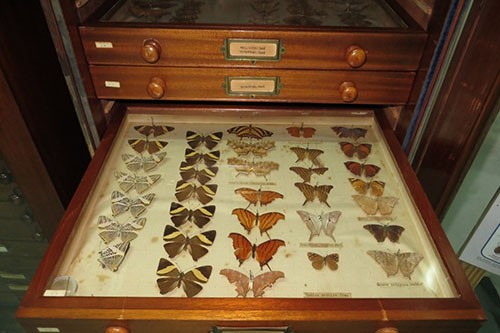
Museums are not just about preserving specimens to be enjoyed by visitors as objects. Natural history collections have much to teach us about the species in a given area at a given time. However, they are most valuable when this information is made easily available through online databases. The butterflies in this case of drawers have now been published onto the open access biodiversity database, GBIF.
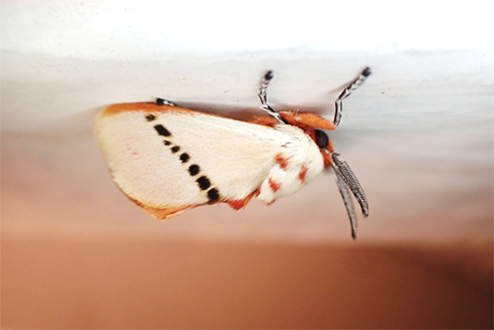
Butterfly specimen
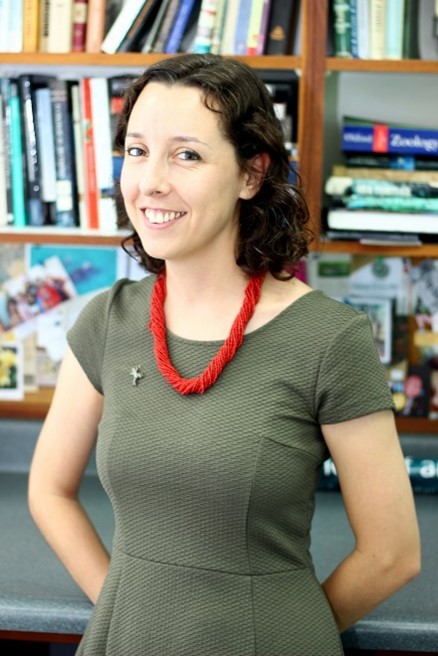
Dr Amy Deacon
Dr Amy Deacon is a Senior Lecturer in Zoology in the Department of Life Sciences at The UWI. Her research interests include biodiversity, aquatic ecology and invasive species.