
“The greatest lesson I learnt from the pandemic is that life changes in the blink of an eye…so we need to love…be flexible…and be our brother’s keeper.” These words from Deanna Gomez-Peyrefitte, an entrepreneur from Belize, echo throughout the Caribbean. Deanna is part of an exciting new project called The Caribbean Corona Chronicles Oral History Project emerging out of The Caribbean Civilisation Unit and the Department of History in the Faculty of Humanities and Education at The University of the West Indies, St Augustine.
The outbreak of SARS-CoV-2 or COVID-19 was declared a pandemic by the WHO on 11th March 2020 and became one of the most devastating public health disasters in world history. The COVID-19 outbreak completely destabilized global economic and political systems and transformed social and cultural practices in every nation of the world. The Caribbean, a diverse region that is economically dependent on international trends and industries, was deeply affected by this crisis. Mandatory quarantine, border closings, public shutdowns, social distancing and compulsory mask wearing were instituted and industries and services were brought to a standstill as health authorities around the world fought to contain the deadly contagion and the race for a vaccine intensified. Amid this societal chaos, innovation in digital technology and engagement and work-from-home opportunities flourished. The lives of Caribbean people were dramatically transformed.
In the face of such historic circumstances, it was incumbent upon scholars of history and the humanities to begin to find ways to capture and preserve the essence of the COVID age and study and compare the impact of this epic crisis on Caribbean peoples. The Caribbean Corona Chronicles Oral History Project was therefore designed to answer this need. Conducted by a team of nine researchers from the Caribbean Civilisation Unit and the Department of History, the goal of this three-year project is to record and begin to assess the revolutionary changes caused by the Covid-19 pandemic in the lives of Caribbean persons and societies. Utilizing the Zoom Web Conferencing platform for interviews and UWISpace and Youtube as the digital repositories, an online public archive is being created of 200 recorded and transcribed interviews of persons of various vocations across the Caribbean whose lives have been impacted by the COVID-19 pandemic and subsequent lockdowns.
Over 70 interviews of individuals around the Caribbean have already been made accessible to researchers through the project website. In targeting interviewees, the research team focused on diversity of gender, age, socio-economic status and geographic distribution across the Caribbean and within Caribbean territories (urban and rural). With interviewees, for example, from Trinidad and Tobago, Antigua and Grenada in the eastern Caribbean, to Belize in Central America and the diaspora Caribbean communities in North America, this project already boasts a rich composite of Caribbean experiences and once completed, will be a significant historical source for COVID-19 pandemic researchers across the world.
In these candid interviews, Caribbean teachers and students reveal the trauma associated with the dramatic shift to online teaching and learning. Members of the entertainment industry expose their personal stories of growing debt due to the loss of income as a result of event prohibitions and the general lockdown. Businessmen and employees describe the severe impact of the decline in business and the loss of jobs but also their newfound avenues for commerce. Additionally, through these oral histories, religious leaders, government officials and non-profit organizations provide insight into the Caribbean’s extensive pandemic relief efforts. Individuals who were directly involved in the frontline of the fight against COVID-19 are also represented; doctors, nurses and other medical staff from across the Caribbean openly describe their harrowing experiences during the pandemic. One special group of interest to the research team was COVID-19 survivors. Via the archive, these survivors share their complex encounters with the local public health systems through their hospitalization, quarantine and recovery from this deadly virus.
The project website, caribbeancoronachronicles.com, serves as the platform for exhibiting The Caribbean Corona Chronicles Oral History Archive. This archive (currently accessible but scheduled to be completed in August 2024), makes this rich pool of interviews freely available to the public and offers critical first-hand accounts about the Caribbean COVID-19 pandemic experience to academic researchers, documentary makers, analysts and policy makers that will undoubtedly help to strengthen our future public health responses.
If you wish to participate in this important project, please email us at caribbeancoronachronicles@gmail.com.
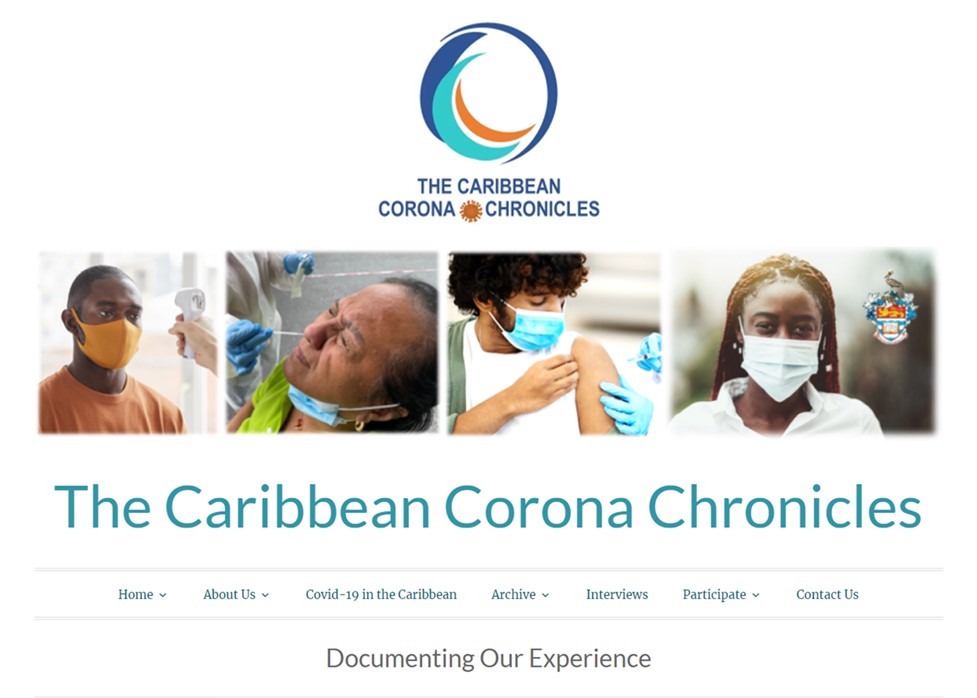
Image of the Homepage of The Caribbean Corona Chronicles Oral History Archive Website, caribbeancoronachronicles.com
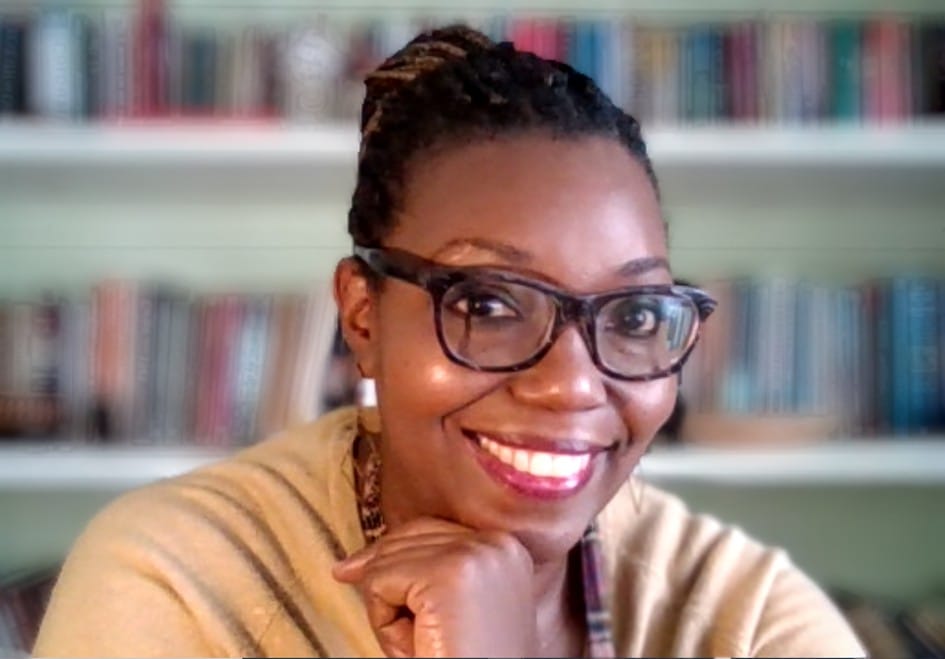
Dr Debbie McCollin
Dr McCollin is the Project Leader, Regional Coordinator of Caribbean Civilisation Unit and Lecturer in the Department of History.