
Amidst the increasing frequency and intensity of natural hazards, climate variability and extremes, it is critical that Caribbean Small Island Developing States (SIDS) improve their resilience to minimize impacts on lives and livelihoods. Whilst disaster/climate resilience transcends local responses, as a region and as a country we have a responsibility to ensure we do what we can to preserve the quality of our existence.
In 2020, Trinidad and Tobago ratified the Sendai Framework for Disaster Risk Reduction (SFDRR), formally committing to implement associated intervention and strategies and plans. The Framework is meant to guide efforts in reducing disaster risk. It spans 15 years (2015-2030) and aims to create resilience against natural and man-made disasters. Its key pillars include understanding disaster risk, strengthening governance, investing in disaster risk reduction, enhancing preparedness, and building back better after disasters. The framework emphasizes the importance of integrating disaster risk reduction into development processes and promoting inclusivity. It calls for the involvement of all stakeholders, including governments, communities, and organizations. Ultimately, the Sendai Framework seeks to save lives, protect livelihoods, and ensure sustainable development in the face of disasters. If we are to examine the pillars, it will be very apparent that as a country, considerable effort is needed.
Do we really understand the hazards we face? Does our governance systems and institutional arrangements allow for effective management of disasters? Do we invest in risk reduction strategies? Do we “build back better”? The answers to these questions may vary depending on who you ask, however I am certain that we will all agree that even if we consider the answer to be yes, much more can and should be done.
Having conducted research in this area for over 15 years, I can say that there has been considerable progress towards understanding the common major natural hazards, such as floods and landslides for example. We know where flooding is expected to occur, we know the areas with the potential for mass movement. Various developmental and state agencies with whom I would have collaborated and supported have also completed numerous vulnerability assessments, so we are also fully aware of the priority areas. The problem is really the implementation end. We have not been able to effectively improve our governance mechanisms, we have not had significant direct investment from the state in disaster reduction strategies and most of all, we have not been able to “build back better”. Our governance mechanisms result in duplication of effort, consists of impotent and ambiguous legislation and undefined or ill-defined roles and responsibilities. This often limits efficacy and impact. Risk reduction strategies are primarily reactive leading to crisis management as opposed to risk management limiting our capacity to improve resilience to future hazards.
So what can we really do? The first step is to build capacity and provide avenues by which the knowledge gained can be effectively actioned. A population that understands disaster risk and its associated consequences is far more resilient than one that does not. We must then ensure that we adopt and implement contemporary techniques to build resilience and seek avenues to finance these efforts.
At the FFA UWI a new Undergraduate Major “Disaster Risk Resilience for Agriculture and the Environment” welcomed its first cohort of students in September 2023. This programme was developed in response to the national and regional need for disaster management professionals and it is the first of its kind at an undergraduate level in the region. This innovative program not only equips students with the essential knowledge and skills to address environmental risks but actively contributes to enhancing the nation’s resilience in the face of mounting challenges, including climate change-induced disasters. By nurturing a culture of resilience, promoting interdisciplinary research, and raising public awareness, the program serves as a transformative catalyst, empowering future leaders and safeguarding Trinidad and Tobago’s natural resources and communities, ultimately ensuring a more prepared and resilient nation. We have also conducted significant research on various aspect of disaster risk management including governance and coordination mechanisms in support of improved disaster management and to inform policy. Some recent examples include:
• Supporting the OPDM and UNDP in developing a Coordination Mechanism for Flood Early Warning Systems.
• An Assessment of the impact of COVID-19 on the Water Sector and Agri-Food System.
• Supporting the TTBS in developing a voluntary standard for the use of treated wastewater for agriculture and landscaping purposes.
• Salinity and Soil Organic Carbon assessment of the soils in both Trinidad and Tobago
• Supporting OECS and GWP-C in developing a Regional Integrated Water Resources Management Framework.
Currently assessing the efficacy of various Nature-Based Solutions (NBS) towards improved slope stability and moisture regulation in soils, assessing the potential of biosolids as a soil amendment and exploring insect farming as avenue to supplement protein for poultry and aquaculture. All these activities contribute to the various pillars of the Sendai framework with potential to improve our resilience as a country.
As we confront an uncertain future with the growing threats of climate change and natural disasters, my effort and that of my colleagues alike serve as a reminder that disaster risk resilience is not just an abstract concept but a tangible reality achievable through science, dedication, and collaboration. Let’s all do our part to build a resilient Trinidad and Tobago.
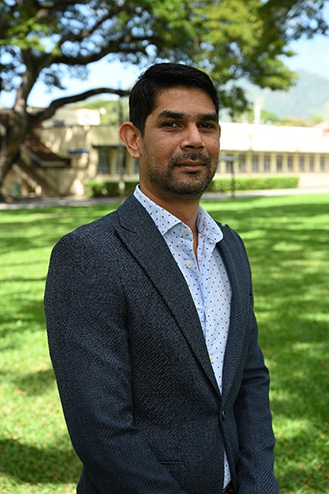
Dr Ronald Roopnarine
Dr. Ronald Roopnarine is a researcher and academic with a thorough background in Disaster Risk Resilience and Sustainable Land and Water Resource Management. Presently, Dr Roopnarine is the Deputy Dean – Outreach and a Senior Lecturer in the Faculty of Food and Agriculture, UWI.