SUNDAY 13TH MARCH, 2016 – UWI TODAY
17
HEALTH
Gerard Best is a Communication Consultant and Journalist, with a focus on Caribbean Development and Open Data. Follow @gerardbest on Twitter.
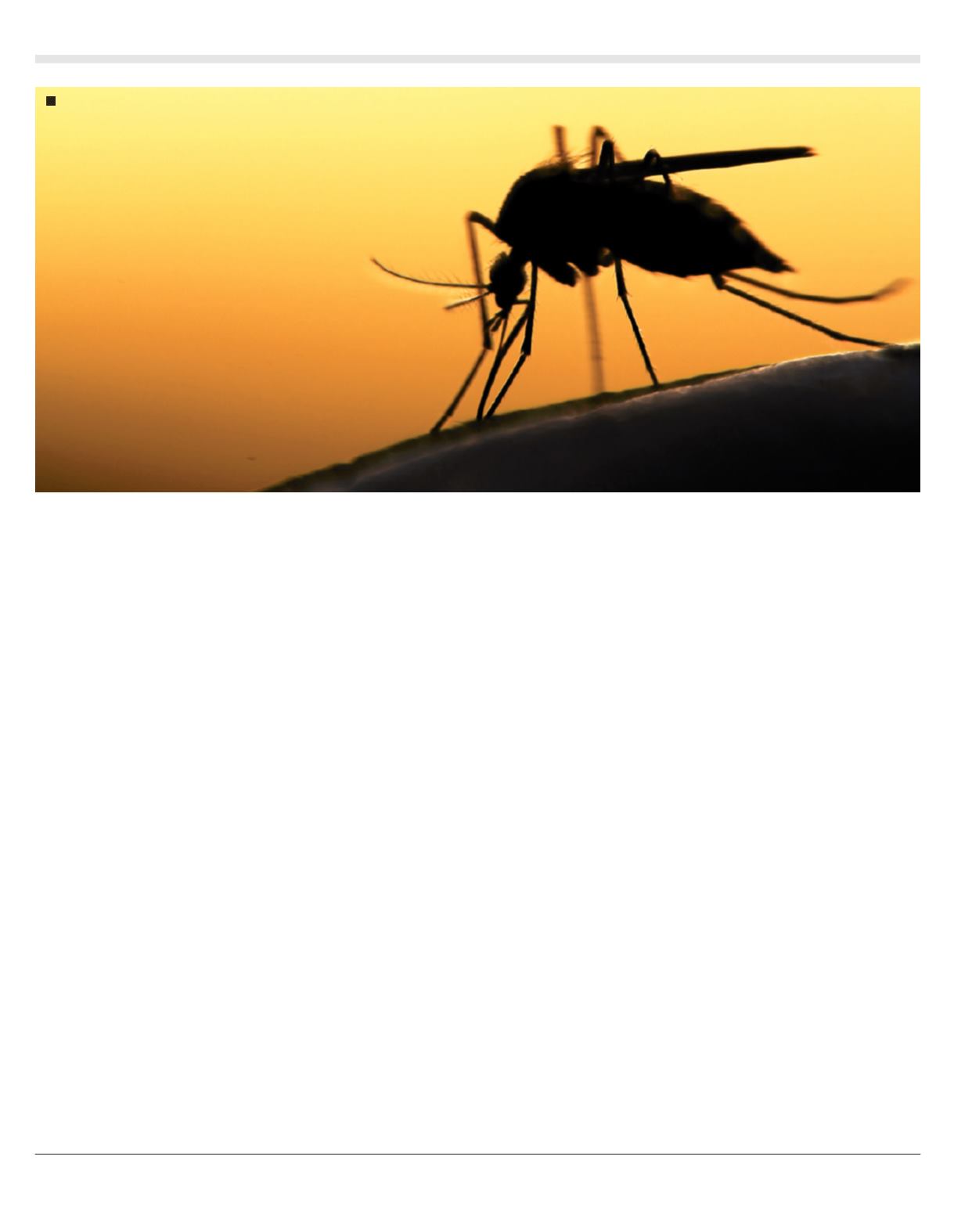
While the explosive spread of the Zika
virus through
the Americas is getting noticed worldwide, the Caribbean
should be equally concerned about non-communicable
diseases. The threat of Zika, though formidable, is hardly
singular. Heart attack, stroke, chronic respiratory diseases,
cancers and diabetes cause high morbidity and drain
regional governments’ health budgets.
It’s not hard to see why Zika has captured the world’s
attention. It has been fodder for global news, prompting
mass media hyperbole. Not since the West Africa Ebola
outbreak has a disease so consistently generated such
panicked headlines. The mosquito-borne virus quickly
became a flashpoint for arguments over everything from
climate change to reproductive rights, not tomention heated
debates over what we can and cannot yet know about it.
The reality remains unknown, in part because
a definitive link between the virus and other serious
complications appears difficult to establish. Notably in
Brazil, an observed but not yet confirmed link to a surge in
microcephaly – babies born with abnormally small heads
– is troubling; as is another unproved link to Guillain Barré
Syndrome, a neurological illness that causes paralysis.
That uncertainty is fanning the flames of the worst
health scare in recent history, in spite of assurances from
World Health Organisation (WHO) Director General
Margaret Chan that Brazil is doing a good job ensuring that
the Olympic games it will host in August will be safe for
athletes and visitors. TheWHO declared the Zika outbreak,
which has spread tomore than 30 countries, an international
health emergency on February 1.
If you had to put a number to the level of uncertainty
surrounding Zika, it would probably be 1.8 billion. That’s
roughly the figure that US President Barack Obama asked
Congress to set aside for work on halting the spread of
the virus. The bulk of the money would go to the Center
for Disease Control and Prevention, which has dedicated
hundreds of staffers to responding to the outbreak.
Some Caribbean leadersmatched theirUS counterpart’s
concern, although our national and regional public health
agencies lack the equivalent operational capacity and
access to finances. In Trinidad and Tobago, the Health
The
Zika
THREAT
and the regional reality
Declaration is ongoing, and recommendations are to be
presented to the World Health Assembly in May and to the
CARICOM Heads of Government meeting in July 2016.
The highest risk factors for NCDs are being overweight
and obese, and part of what feeds poor dietary choices
is the vast amount of unhealthy foods being imported
into the region and insinuating themselves into everyday
consumption, according to a 2015 State of Food Insecurity
in the CARICOM report released by the United Nations
Food and Agriculture Organisation Subregional Office for
the Caribbean based in Barbados.
The imported foods we eat are literally making us sick,
contributing to the increased prevalence of chronic NCDs.
Sedentary lifestyles and a predilection for food low in
nutrients, energy-dense and high in fats, oils, sweeteners and
sodium leave us vulnerable to diabetes and hypertension,
stroke, heart disease and some forms of cancer.
Food imports are by far the largest source of food for
CARICOMcountries, which import more thanUS$4 billion
in food annually. Processed foods, grains and livestock
products are among the top five food import categories,
accounting for over US$ 1 billion or approximately 25%
of annual food imports regionally. Half of CARICOM
countries import more than 80% of the food they consume.
In part, the Caribbean’s inherent vulnerability to natural
and economic shocks is responsible for undermining efforts
to advance regional food security. From 1990 to 2014,
182 major natural disasters occurred in the region. But
improved public policy is critical to achieving improved
food and nutrition security. Public policies are essential
for the sustainable management of food systems such as
school feeding programmes and early childhood nutrition
programmes.
Strong leadership is needed to ensure
beneficial health outcomes for our populations.
Even as we formulate our response to Zika and other
infectious diseases, we would do well to apply any lessons
learned to the fight against NCDs. We certainly cannot
afford to allow Zika to simply become just the latest
distraction from our more longstanding, widespread and
intractable health issues.
Ministry’s declaration of a national emergency actually came
days before the World Health Organisation declared the
global health emergency. The UWI has set up a task force
specifically to address it.
Zika fully deserves that level of attention, not just from
regional leaders but all Caribbean citizens. Eradicating
mosquito-borne disease is a responsibility we all share. And
the only way to deal with the virus at present is to reduce
the population of the Aedes Aegypti mosquito vector, which
is an old friend to the Americas, having long facilitated the
spread of yellow fever, dengue and Chikungunya. Health
officials must now redouble perennial efforts to educate
and motivate information-swamped publics to get rid of
potential mosquito breeding sites.
At the same time, the region’s tourism industry – many
states’ economic mainstay – has to stomach the prospect
of vacationers rethinking their trips. The CDC has warned
pregnant women and those planning to become pregnant
against travel to several popular regional destinations. Some
airlines are reportedly offering free postponements or full
refunds to customers holding tickets to places identified by
the CDC as affected.
If the threat of Zika is immediate, far-reaching and
multi-layered, the region’s response must also be urgent,
consultative and multi-sectoral. Regional leaders should
follow the same playbook of urgent, aggressive, collaborative
action to eliminate non-communicable diseases (NCDs).
The Caribbean has both the highest prevalence of NCDs and
the highest mortality fromNCDs in the Americas. Four out
of 10 deaths under the age of 70 are potentially preventable.
In Trinidad and Tobago, where NCDs are the leading
cause of death, there have been some encouraging signs.
NCD-reduction has been identified as a national priority
development issue, and the government identified the
development of the National NCD Strategic Plan as a
priority.
Regionally, a 2007 CARICOM Heads of Government
Summit on NCDs produced the Port of Spain Declaration,
which helped to lead the way to the 2011 United Nations
High Level Meeting. The process of evaluating the
national and regional implementation of the Port of Spain
B Y G E R A R D B E S T


