
Human rights is under served in the Caribbean, according to Professor Rose-Marie Antoine, Dean of the Faculty of Law at UWI/St Augustine. The lack of legal services and advocacy, she believes, leaves marginalised groups in Trinidad and Tobago vulnerable to human rights abuses.
Yet the country has a solid human rights record. In fact, Trinidad and Tobago has signed and ratified several international conventions and agreements. And it is in the top 45 of countries ranked highest in human rights and rule of law by TheGlobalEconomy.com, an online research resource. But this good record might be to blame for the lack of urgency in combating the human rights abuses that do occur.
“I think the problem has been that we are quite apathetic simply because we haven’t had the type of gross violations of human rights that some other regions have had,” Dean Antoine said.
To raise the awareness and to enhance human rights in the region, the Faculty of Law set out to find funding for a project that would integrate human rights advocacy and legal education.

“We had been scouting around for funds and that is where the role of STACIE was most helpful,” Dean Antoine said. She and her team responded to a call for proposals from the European Development Fund (EDF), bidding for and winning TT$1.5M in funding for the project titled Strengthening Trinidad and Tobago’s Human Rights Capacity through Innovative Legal Education Delivery.
The donor project was administered by the Ministry of Planning in collaboration with STACIE. The two-year project led to the creation of the Faculty’s new International Human Rights Clinic and corresponding LLB course.
Dean Antoine, during her time as a commissioner and president on the Inter-American Commission on Human Rights, had seen leading universities bring matters before the commission through their human rights clinics and thought the UWI needed its own.
“I wanted to have a clinic in the Caribbean; there was no such thing in the region,” the Dean said. “I thought we could do it. So I started it.”
Through the human rights clinic, students and staff engage in human rights activism and research with NGOs, attorneys, the state and international organisations. They also participate in international presentations and litigation to advocate for law reform and social change.
Advocating for Human Rights Internationally
The Faculty applied to the Inter-American Commission on Human Rights and successfully landed two hearings before the commission in Washington, DC. The first hearing dealt with the rights of Venezuelan migrants to Trinidad and Tobago. It was the first time the University had a delegation present before an international body.
At the second hearing, Dean Antoine and two students presented to the commission about remand injustice in Trinidad and Tobago. There they described how prisoners were subject to lengthy pre-trial detention periods, often exceeding 10 years and sometimes extending beyond the maximum sentence for the crime for which they were detained. They also argued the special condition of women detainees who were also victims of domestic abuse.
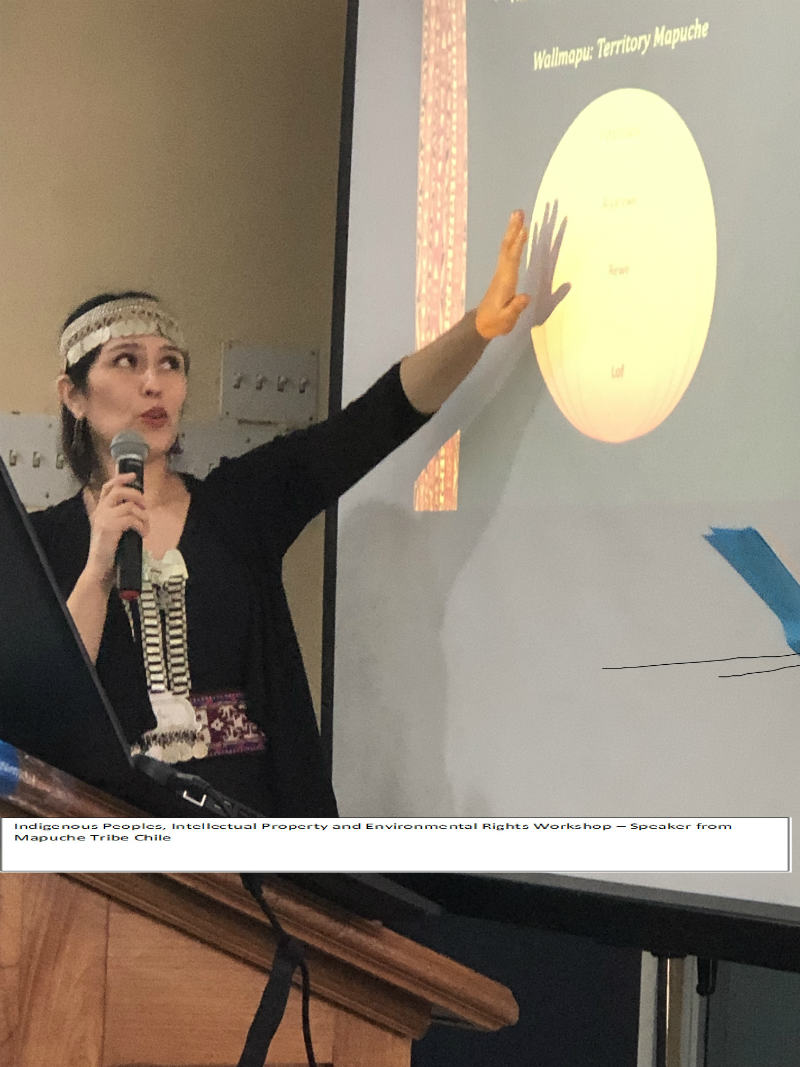
Indigenous Peoples workshop group photo best with Elsy Curihuinca
The presentation seemed to shock the commissioners.
Rapporteur to Trinidad and Tobago, Antonia Urrejola, said that she found it “difficult to believe the numbers”, referring to the more than 60% of all prisoners being on remand and the high number of women detainees who were also victims of domestic violence.
Commissioner Margarette May Macaulay added: “I am so stunned that I am almost speechless ... What are the judges doing? What are the politicians doing? ... Trinidad is in dire need of human rights [training].” She recommended that the commission offer technical assistance to the country's judges and bar association.
Describing the significance of a hearing before the commission, Dean Antoine said: “Usually the state attends and they respond ... the idea is that it provides a forum for the state [and civil society] to come face-to-face and try to address the issues through a neutral body.”
Representatives of the government of Trinidad and Tobago, however, did not attend either of the two hearings.
Promoting Public Awareness of Human Rights
The EDF project also facilitated workshops for private attorneys, civil society and government and included a public awareness and outreach campaign.
One public discussion brought together for the first time all the indigenous groups in the country to address environmental rights and intellectual property protection for the cultural heritage and contributions of indigenous people. The workshop explained copyright, trademark, patent and traditional knowledge laws.
In his presentation, Dr Justin Koo of the Faculty of Law said that the First Peoples could use IP law to increase their visibility and preserve their identity.
“Branding is of utmost importance in developing, harnessing and preserving one’s identity,” he said. “Trademark law can be used by the First Peoples to protect their brand and moreover, be used as the means for the T&T population to actively recognise their often ‘underground’ existence.”
The EDF project focused on five main thematic human rights areas: 1) child rights; 2) gender-based discrimination and violence; 3) rights of refugees, migrants and persons deprived of liberty; 4) rights of persons living with disabilities and 5) indigenous communities.
The project is expected to produce a book based on the research conducted by the students and staff, as well as a documentary about First Peoples.


